
LAB NEWS.
Papers, visits, field tests, and everything else happening in the lab.
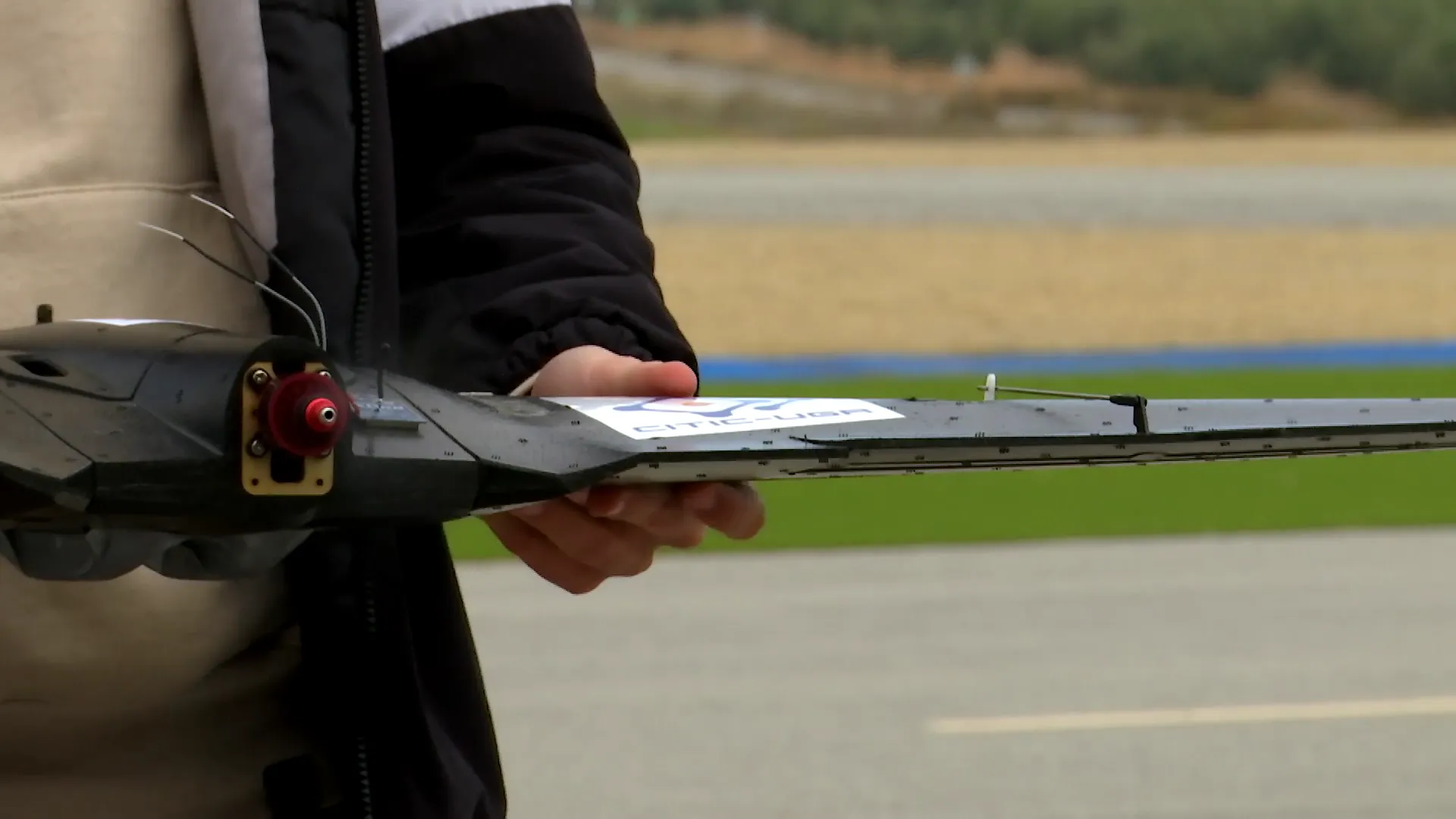
In the press
-
Paper accepted in Applied Mathematics and Computation!
Our paper titled Directional Mollification for Knot-Preserving C∞ Smoothing of Polygonal Chains with Explicit Curvature Bounds, by Alfredo González-Calvin, Juan F. Jiménez and Hector, has been accepted in Applied Mathematics and Computation. We introduce a directional mollification operator that turns a polygonal chain into a C∞ curve that stays arbitrarily close to the original one while passing exactly through its vertices.
Click here for more information →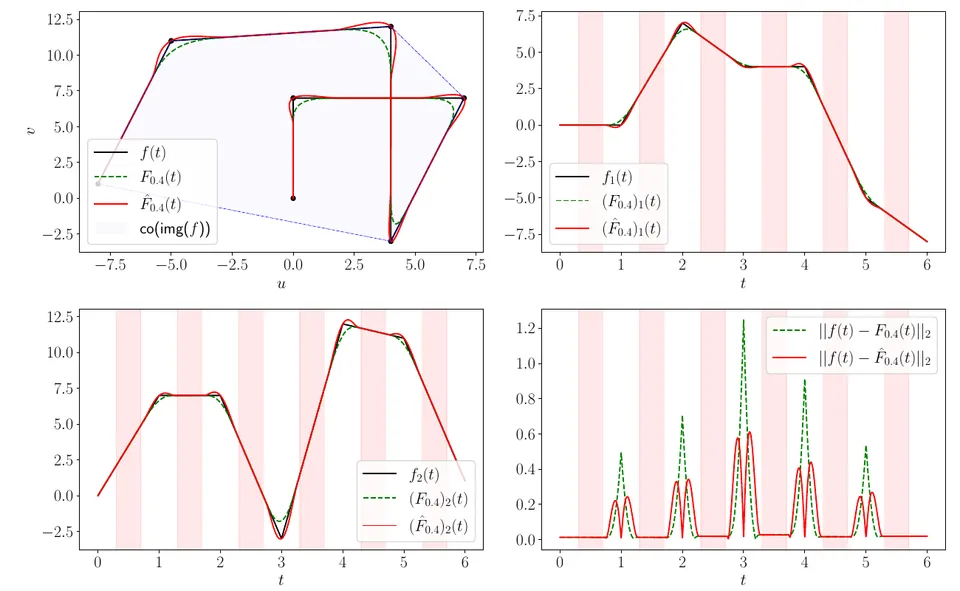
- #talk#visit
Seminar on guiding vector fields at Dalian University of Technology
Jesús Bautista and Hector G. de Marina visited Dalian University of Technology in China, where we gave a seminar on how to construct guiding vector fields for the control of aerobatics and other complex behaviors beyond flat spaces. The talk covered how guiding vector fields extend from paths in the plane to curved spaces such as the group of attitudes SO(3), so that an aircraft can converge to and fly a prescribed sequence of attitudes.
Click here for more information →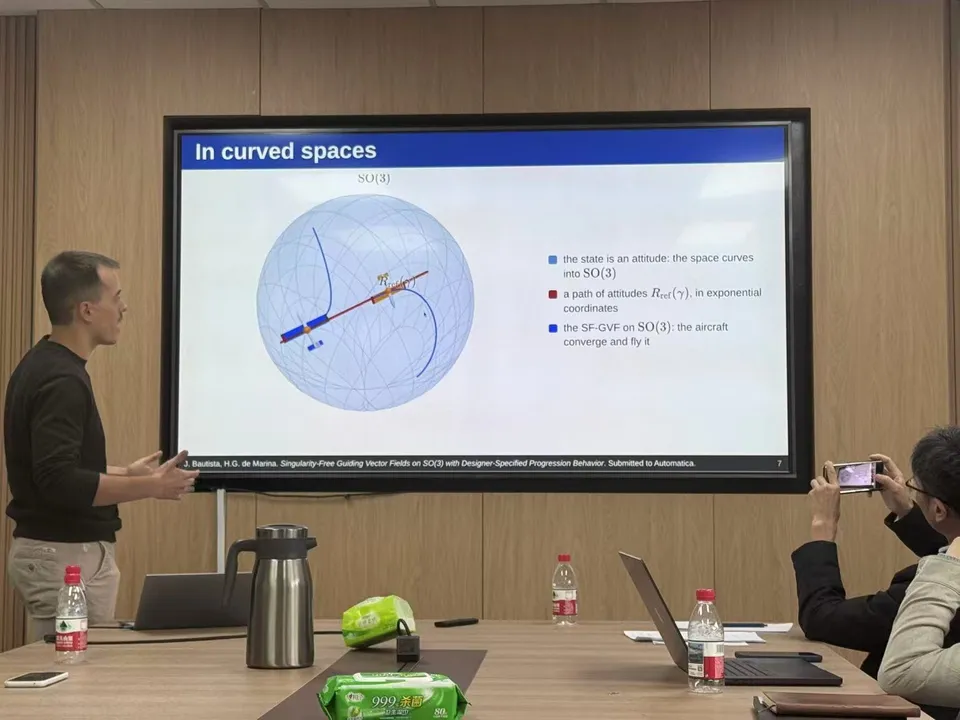
-
Martin Zoula is visiting us this October
Martin Zoula is visiting the Swarm Systems Lab for the whole month of October. He comes from the Multi-robot Systems (MRS) group at the Czech Technical University in Prague, and his PhD focuses on drone communications. During his stay we have been running experiments with our Aerosense system, the ultra-wideband avionics network for drone swarms that we are developing in our ERC Proof of Concept project Aerosense. Thanks for the visit, Martin, it has been great having you here!
Click here for more information →
- #talk
Diego Vela gives a talk on guiding vector fields at the University of Zaragoza
Our Ph.D. student Diego Vela Calcerrada gave a talk at the University of Zaragoza (Unizar) on guiding vector fields for multi-robot coordination. He presented the path from the theory of guiding vector fields to their use in coordinating teams of robots, including our field experiments with fixed-wing aircraft. Thanks to our colleagues at Unizar for the invitation and the lively discussion!
Click here for more information →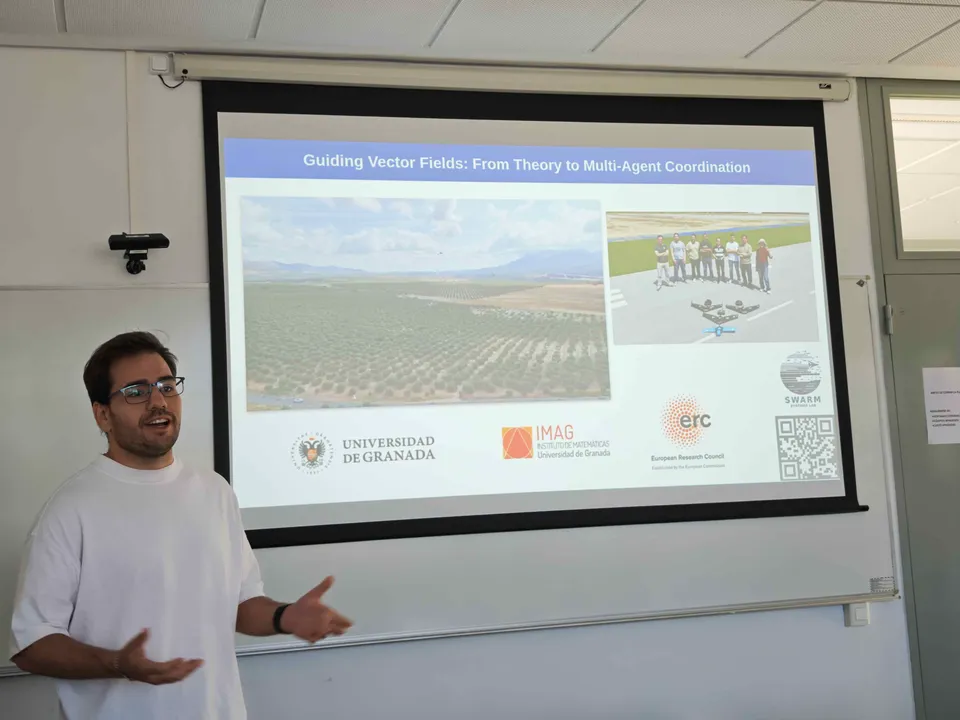
-
Welcome to our new website!
After years on Google Sites we have rebuilt it from scratch. The old one had served its purpose, but it had grown rusty: slow to load, awkward to lay out, and enough of a chore to update that news tended to pile up before anyone got round to posting it. This one is a static site built with Astro and hosted on GitHub Pages. Every page is plain HTML by the time it reaches you, there is no content management system in the way, and adding a post is a matter of dropping a Markdown file and a few photos into a folder.
Click here for more information →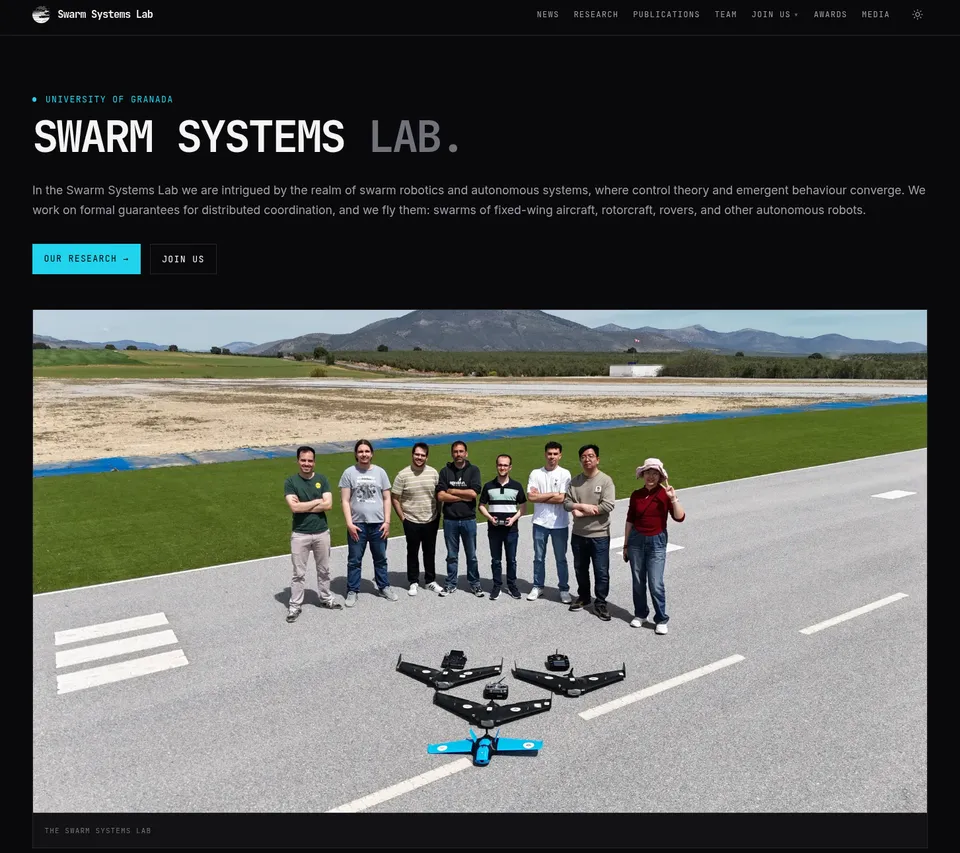
-
Time to go home!
What an Asian tour this time. The Swarm Systems Lab represented by Jingy, Jesús, and Héctor, were visiting the Shanghai Jiao Tong University, the University of Hunan and the 2026 IFAC World Congress in Busan, presenting our latest work in formation control, guiding vector fields and field drone experiments.
Click here for more information →
-
Our more-than-two-years work on source seeking got accepted in the IEEE Transactions on Automatic Control!
It started as a bachelor thesis and it rapidly got out of hands. Thanks to Antonio Acuaviva, Jesús Bautista, José Hinojosa, Weijia Yao, and Juanfran! In this work, we show that for a resilient source seeking, what matters is how disperse is the formation more than other regular symmetries. We made fully distributed and resilient so agents can leave and join the group. The title of the article Fully distributed and resilient source seeking for robot swarms.
Click here for more information →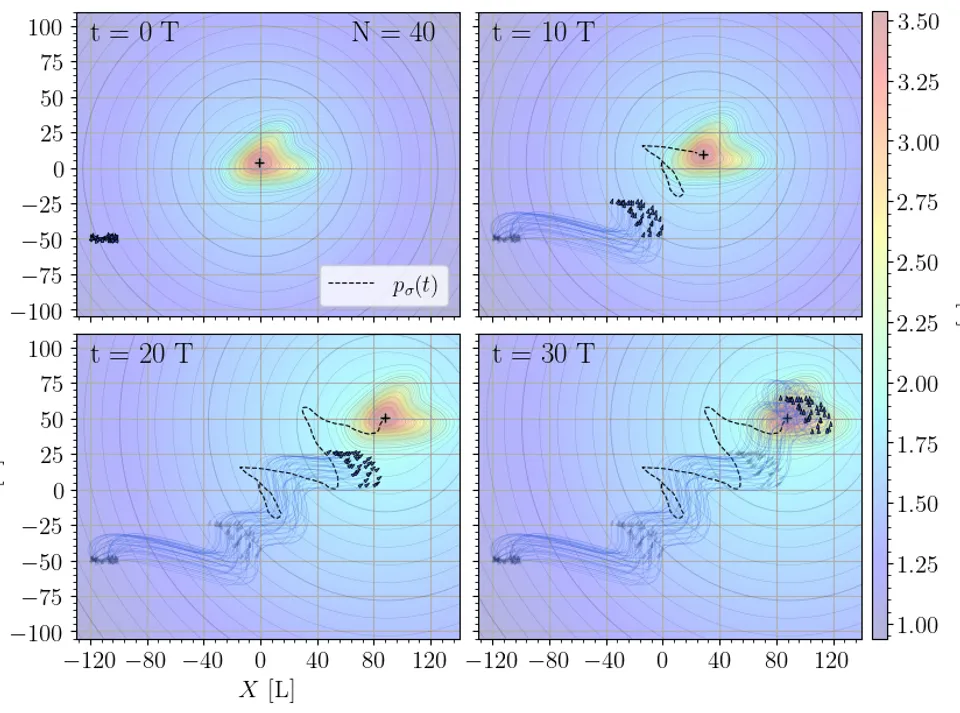
-
Two papers accepted in multi-robot systems!
The first first-author paper for one of our PhD Students of the group, Jesús Bautista. It is titled Leaderless Collective Motion in Affine Formation Control over the Complex Plane and it has an elegant formulation and exact explicit solutions on how affine formations can be designed with the eventual and transitory motions totally predicted. It will appear in IEEE Transactions on Control Network Systems. The second paper has been accepted in Automatica!
Click here for more information →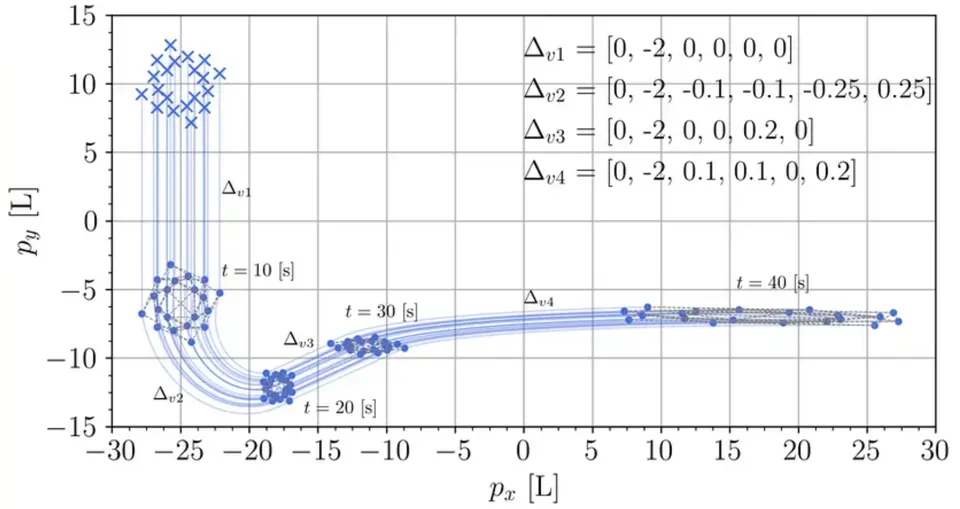
-
New video from the lab
This time showing aerobatics with a fixed-wing drone. No GPS is involved and all the maneuvers are fully autonomous. In fact, we can concatenate and superpose them!
Click here for more information →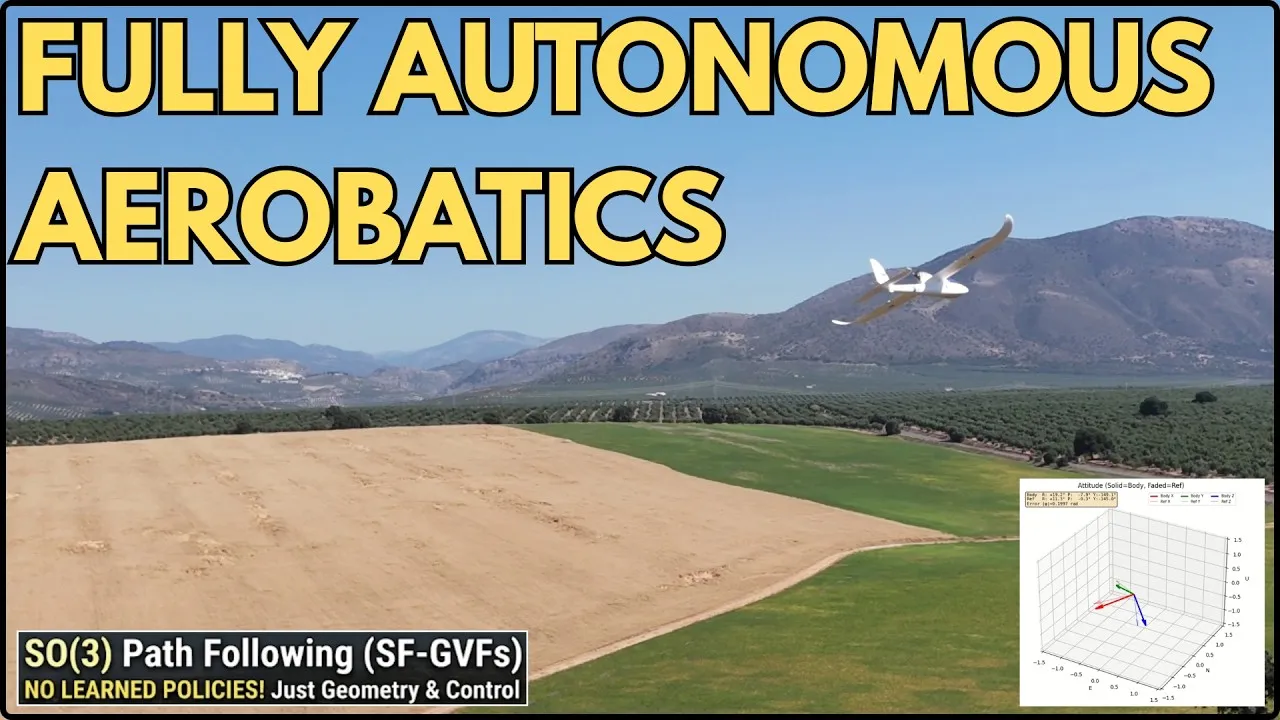
-
The Andalusian TV has made a short (5 min) cover of our ERC Aerosense project :P
The Andalusian TV has made a short (5 min) cover of our ERC Aerosense project :P. It has a good edition. Aerosense is an ERC Proof of Conceptseeking to give spatial awareness employing only distributed and local measurements.
Click here for more information →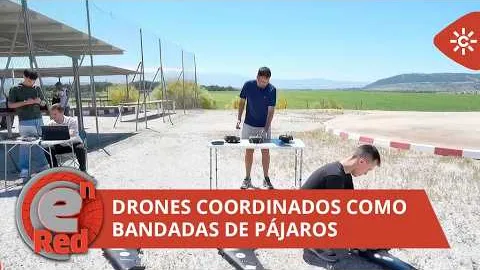
-
Today, we demonstrated our drone technology to a delegation from the Spanish Army, including two generals
Although our research is not military in nature, we recognize the growing importance of drone technology for national security. During the visit, we shared our expertise with MADOC, the branch responsible for integrating innovation into military doctrine and procedures, discussing the next generation of autonomous drone systems.
Click here for more information →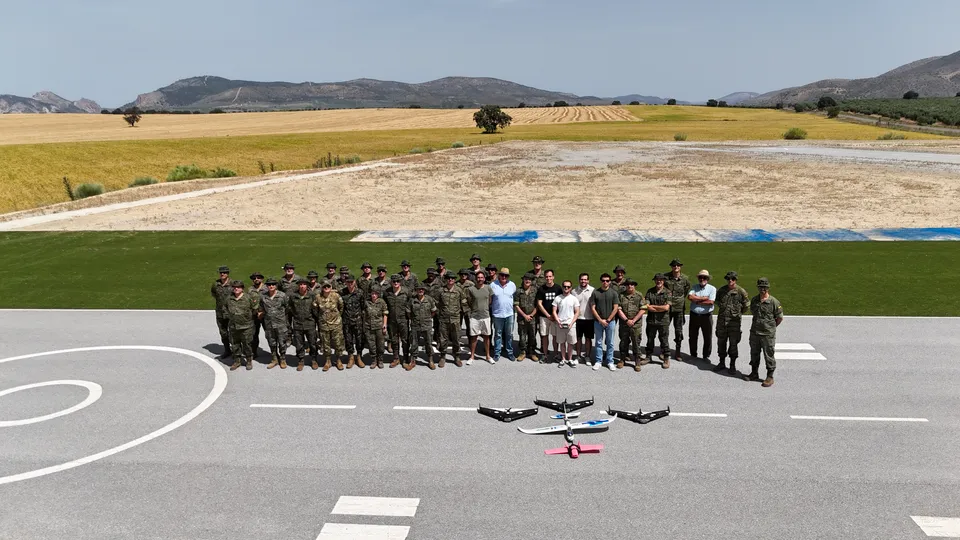
-
Today we had visitors from Westlake University, China
Zirui Chen and Zhanyu Guo were showing us their latest work on following clouds of points as "diffusive paths" and aerobatics with rotorcraft. Thanks a lot for sharing your research with us! Of course, we have shown them around our lab too:P
Click here for more information →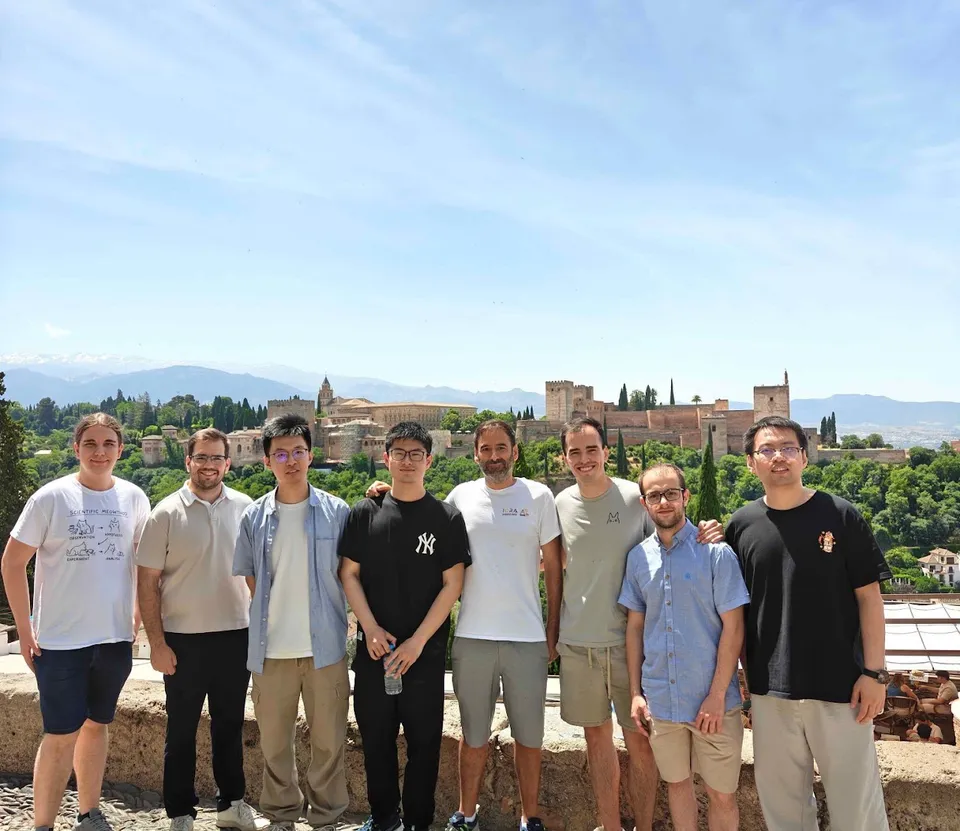
-
New group photo:)
New group photo :). Our 3D printed drones start to take over the traditional foam ones in our weekly flights. We also had two accepted papers to IFAC World Congress!
Click here for more information →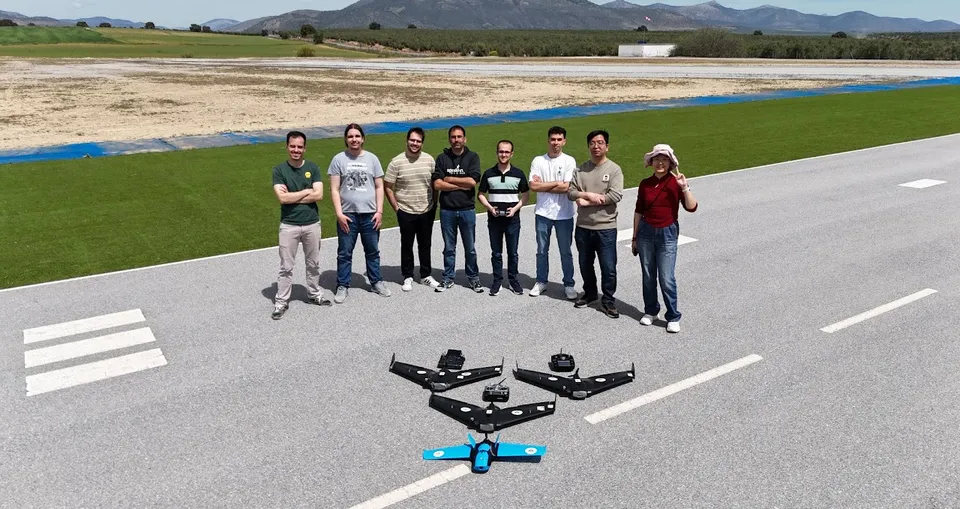
-
The University of Granada has interviewed us!
It's about our ERC Aerosense project. We are also in the news. Check the articles in IDEAL and CANAL UGR.
Click here for more information →
-
Jesús and Héctor were giving a talk in TU-Delft about our latest developments in multi-agent and drone systems
Thanks a lot to Javier Alonso-Mora and his group for the opportunity!
Click here for more information →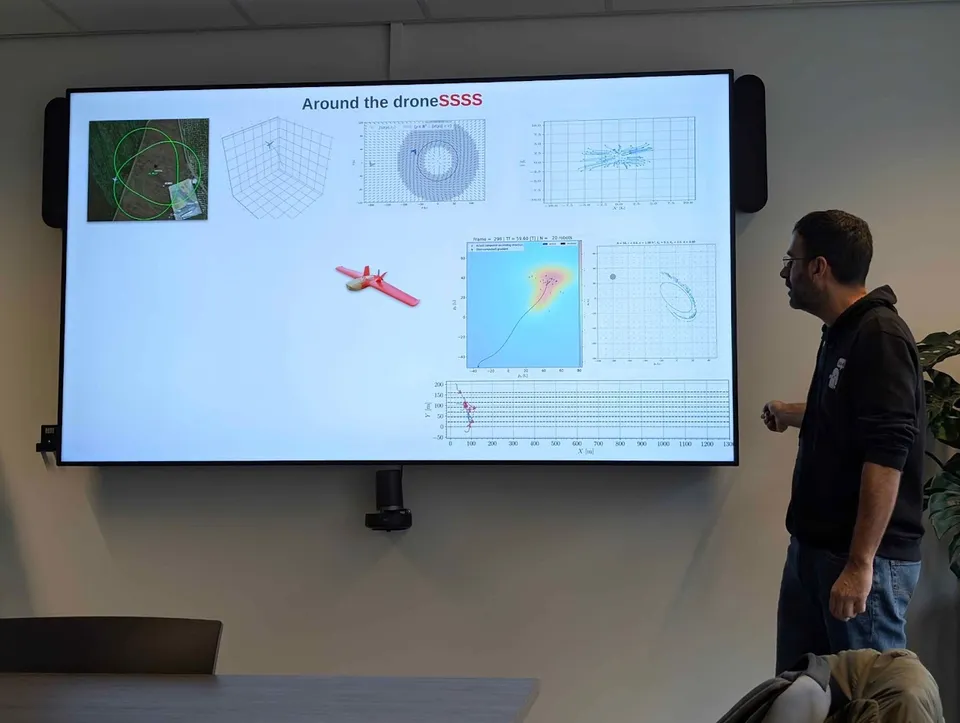
-
Binbin was visiting our group during this week
He is a postdoc from the University of Groningen. We are definitively engaged on how agents, in a purely reactive way, can tag themselves in formation control problems. Thanks a lot for your visit!
Click here for more information →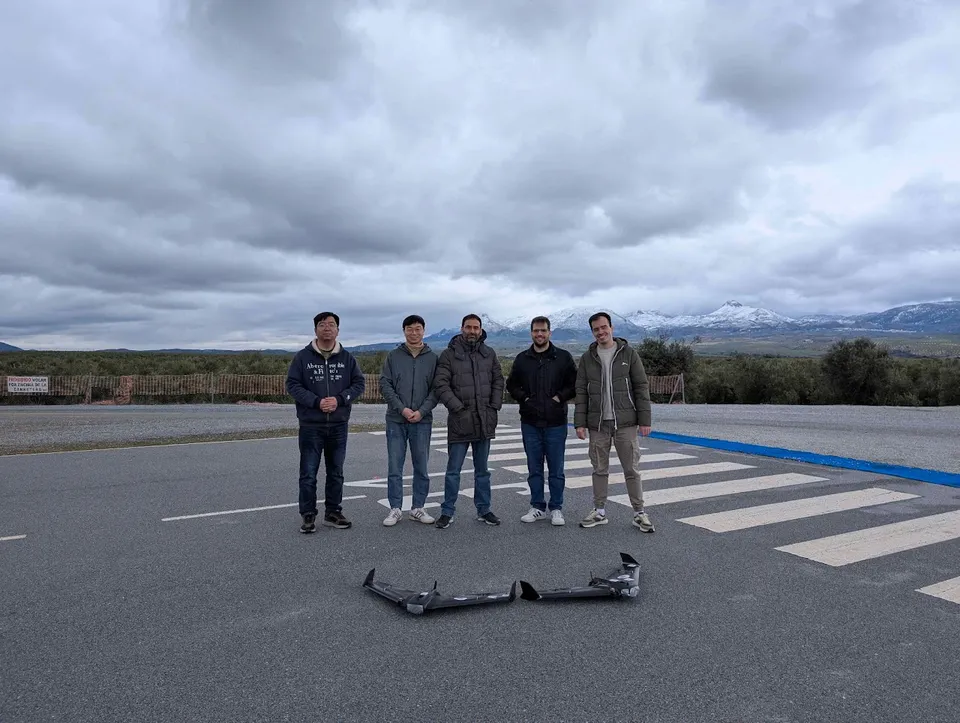
-
Hector was giving a seminar on how heterogeneous imperfections on actuation and sensing impact on consensus algorithms
The seminar was titled Consensus Protocols under Shifted Actuation and Sensing, and was hosted by Lara Briñón at GIPSA Lab in Grenoble, France.
Click here for more information →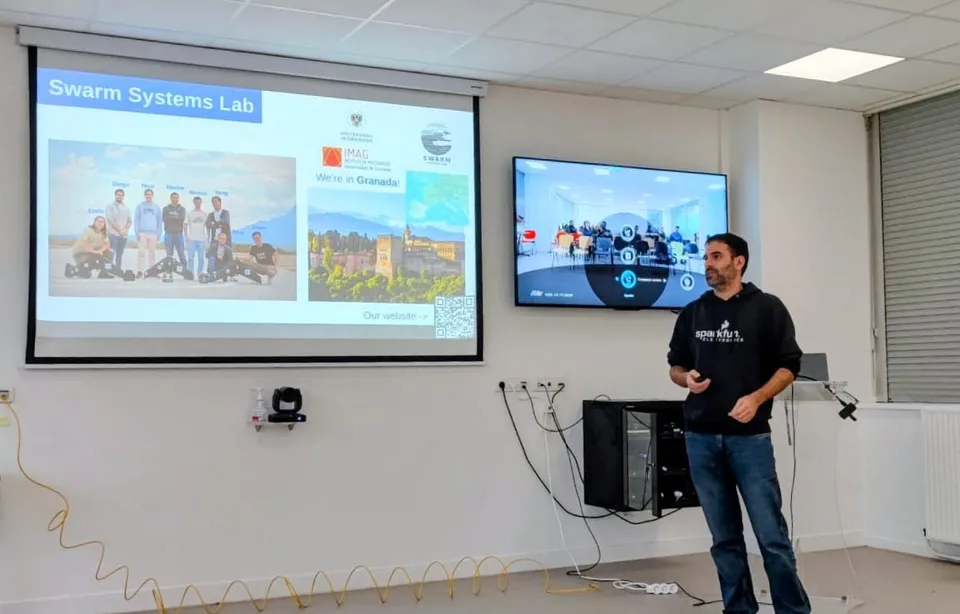
-
We have a visitor!
Michael Epp, a Ph.D. student from the TU Berlin will be with us for at least three months. His interests are also in control theory for multi-agent systems.
Click here for more information →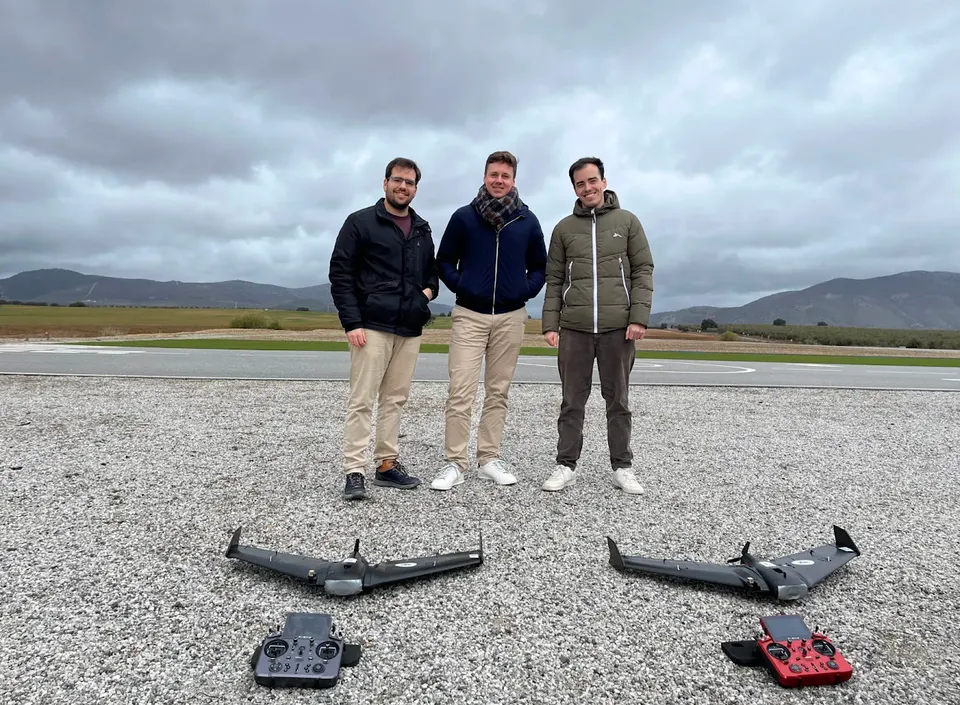
-
We have an interesting paper accepted in the American Control Conference titled Linear quadratic control for discrete-time systems with stochastic and bounded noises led by the postdoc Xuehui Ma
In this work, we show for the first time how to handle stochastic noise that is also bounded simultaneously for estimation filters.
Click here for more information →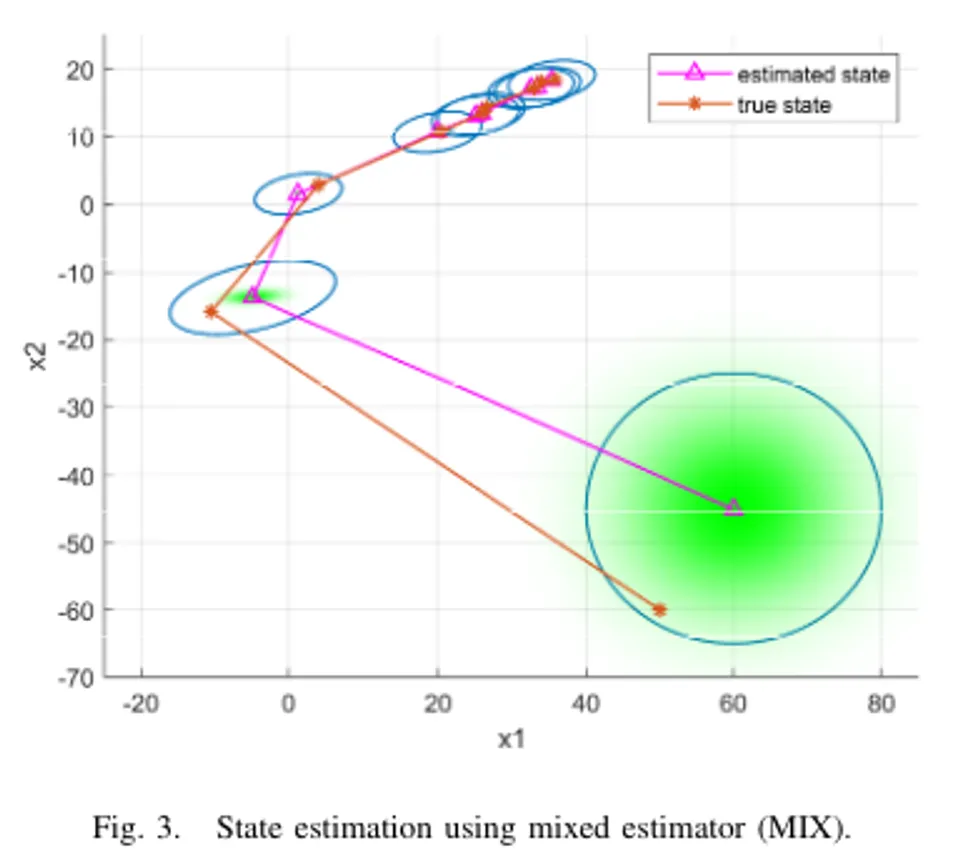
-
We hosted a workshop exclusively on Guiding Vector Fields during the last day of IROS
It went frankly well considering that it was our first time! Thanks a lot to our speakers and attendees!
Click here for more information →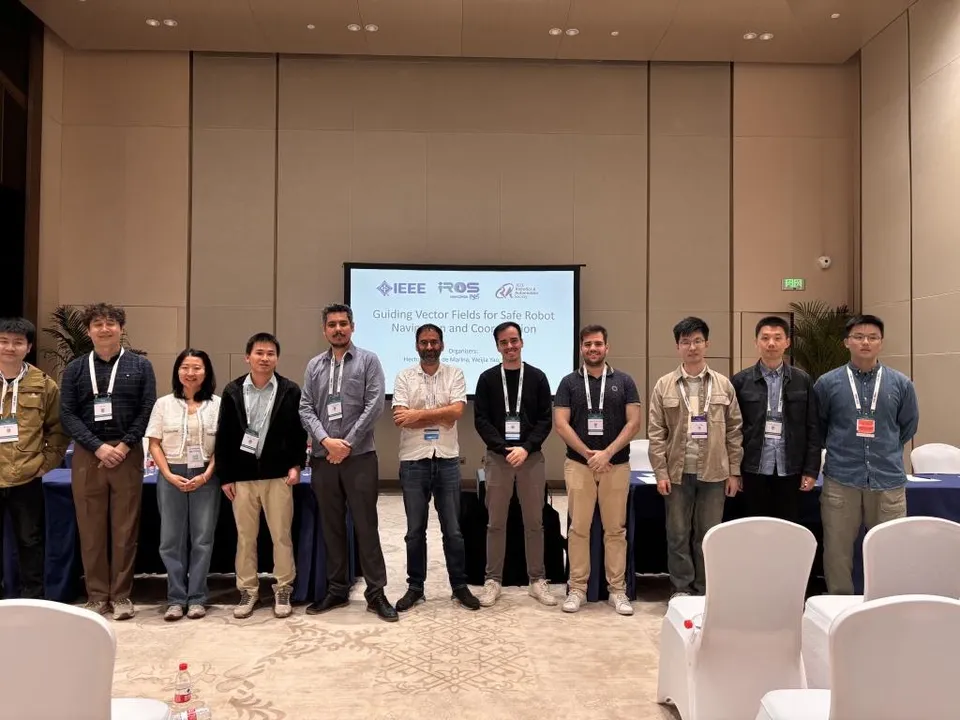
-
We are back from Hangzhou IROS 2025!
We were presenting our work Distributed Oscillatory Guidance for Formation Flight of Fixed-Wing Drones.
Click here for more information →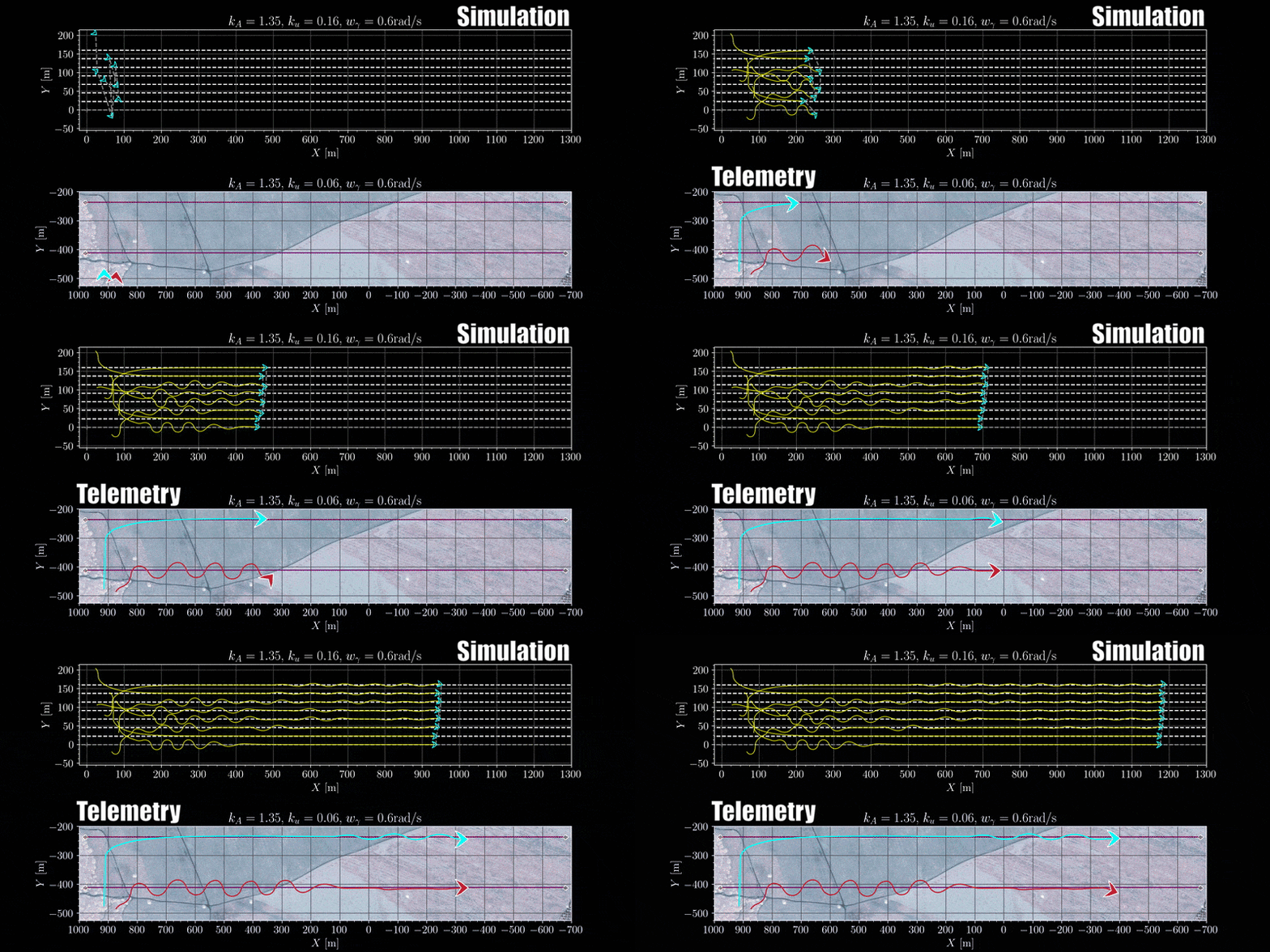
-
We have visited the Windy lab headed by Shiyu Zhao at Westlake University, Hangzhou
They are doing a great job in aerial manipulation with their recently published Nature paper Proximal cooperative aerial manipulation with vertically stacked drones.
Click here for more information →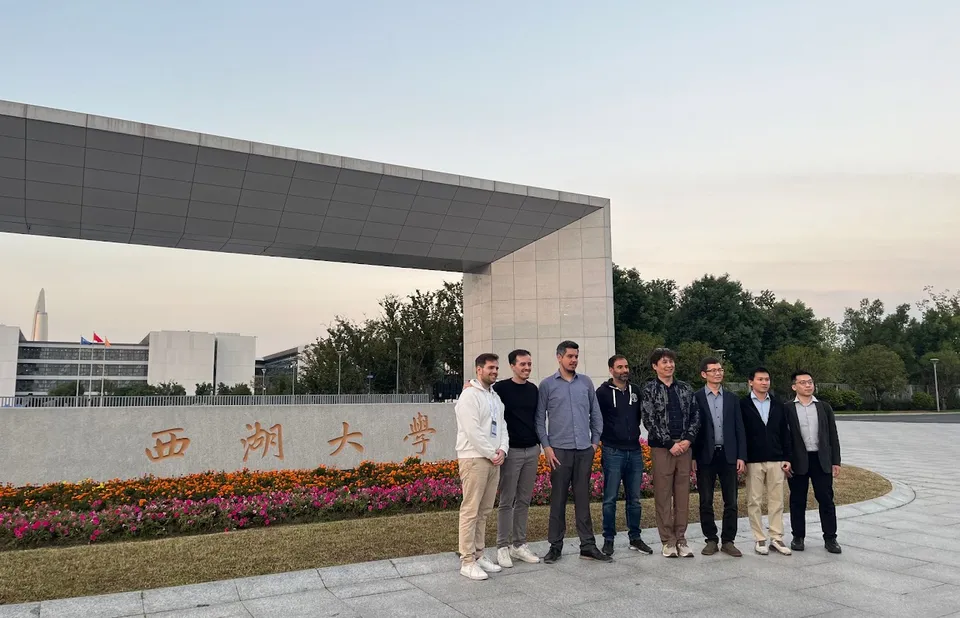
-
From local to global geometry
Our journal paper titled Dispersion Formation Control: from Geometry to Distribution by Jin Chen, Jesús Bautista, Bayu Jayawardhana, Hector Garcia de Marina, has been accepted for publication in the IEEE Transactions on Automatic Control! In this work, we take a step forward in formation control algorithms. Rather than focusing on local geometry-such as controlling distances or bearings to construct precise shapes (e.g., a regular polygon)-we define a global geometry concept: the dispersion, or equivalently, the…
Click here for more information →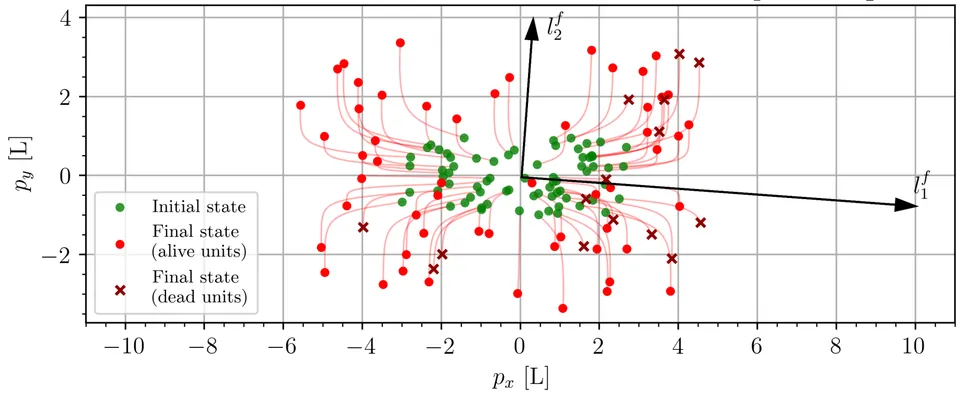
-
How sensing imperfections impact area coverage algorithms?
Our paper titled Voronoi-Based Area Coverage Algorithms: Turning Real-World Fragility into Strength, by Juan Bosco Román Camacho, Enric Morellà Violeta, Omur Arslan, Hector Garcia de Marina, has been accepted at the IEEE International Symposium on Multi-Robot and Multi-Agent Systems (MRS 2025)!! to be held in Singapore in December. From a total of 67 submission, only 48% made it. In this work, we study rigorously how sensing imperfections impact area coverage algorithms.
Click here for more information →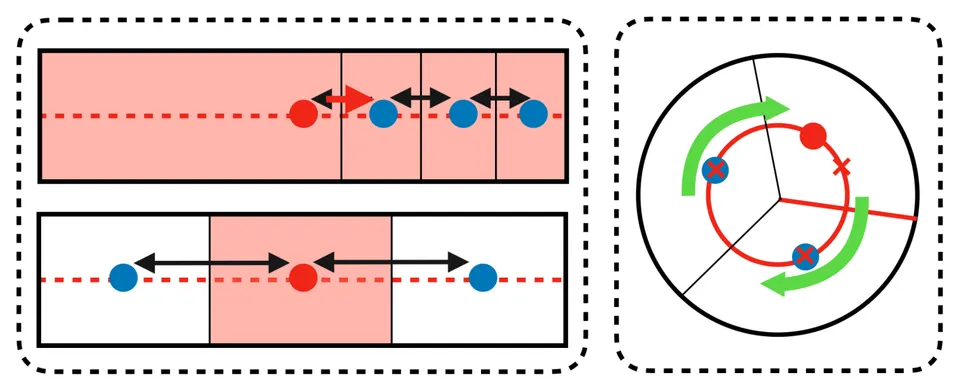
-
Making progress on the relative localization within robot swarms
Our paper titled Multi-Robot Relative Localization Using Interior Angle Measurements authored by Liangming Chen, Hector Garcia de Marina, Lihua Xie, and Chi Zhang, has been accepted for publication in the IEEE Transactions on Control Systems Technology.
Click here for more information → -
In this demonstration, we show how two fixed-wing drones can rendezvous, fly in formation, split, and meet again at a different location - all while flying at 18 m/s
The key is not about controlling the speed; the drones adjust their trajectories cooperatively to ensure successful rendezvous - all guidance runs entirely onboard. With this strategy, wind is no longer a major obstacle.
Click here for more information →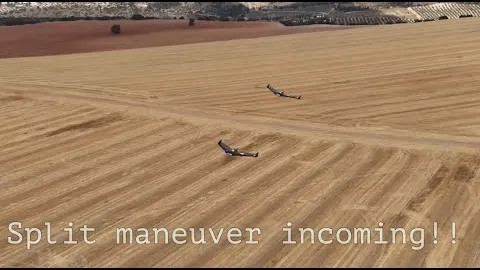
-
We are collecting a lot of raw videos from our experiments, so we decided to start our own Youtube channel:D
We are collecting a lot of raw videos from our experiments, so we decided to start our own Youtube channel :D. Our first video shows how our onboard guiding system compensates for strong wind scenarios, and coordinates two of our flying wings in formation.
Click here for more information →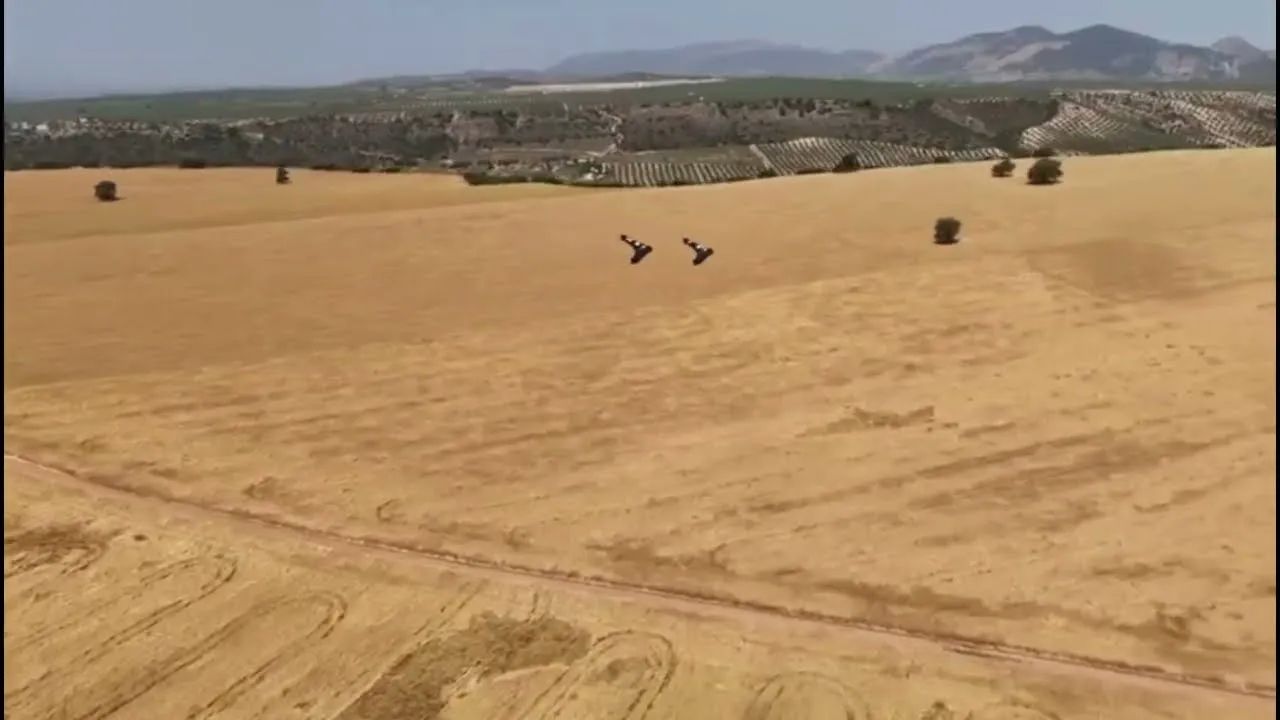
-
We want to show you a 3D square formation with four flying wings
As always, all the logic is on board and distributed. With sound it is always better.
Click here for more information →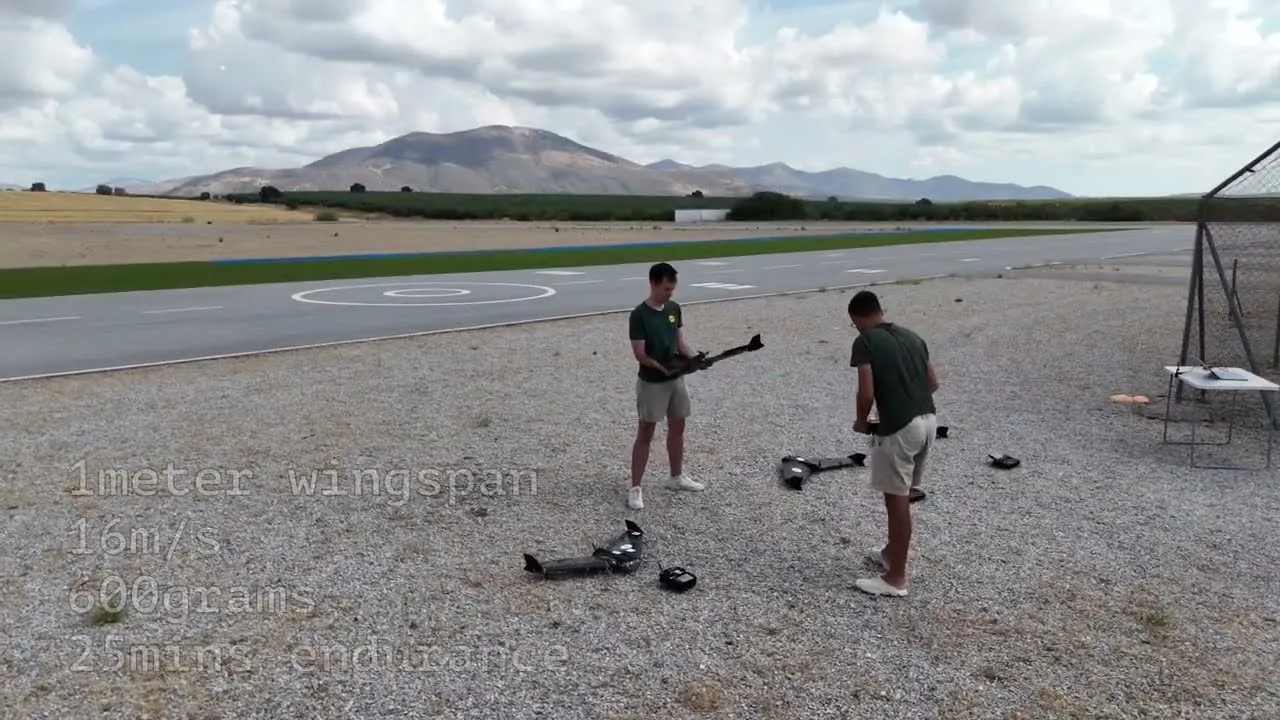
-
We are getting ready to fly four aircraft in a tight, coordinated formation as we begin scaling up our operations with our fleet of fixed-wing drones, marking an important step toward larger and more complex deployment capabilities
Logistics matter when your swarm grows, and it can be an important bottleneck.
Click here for more information →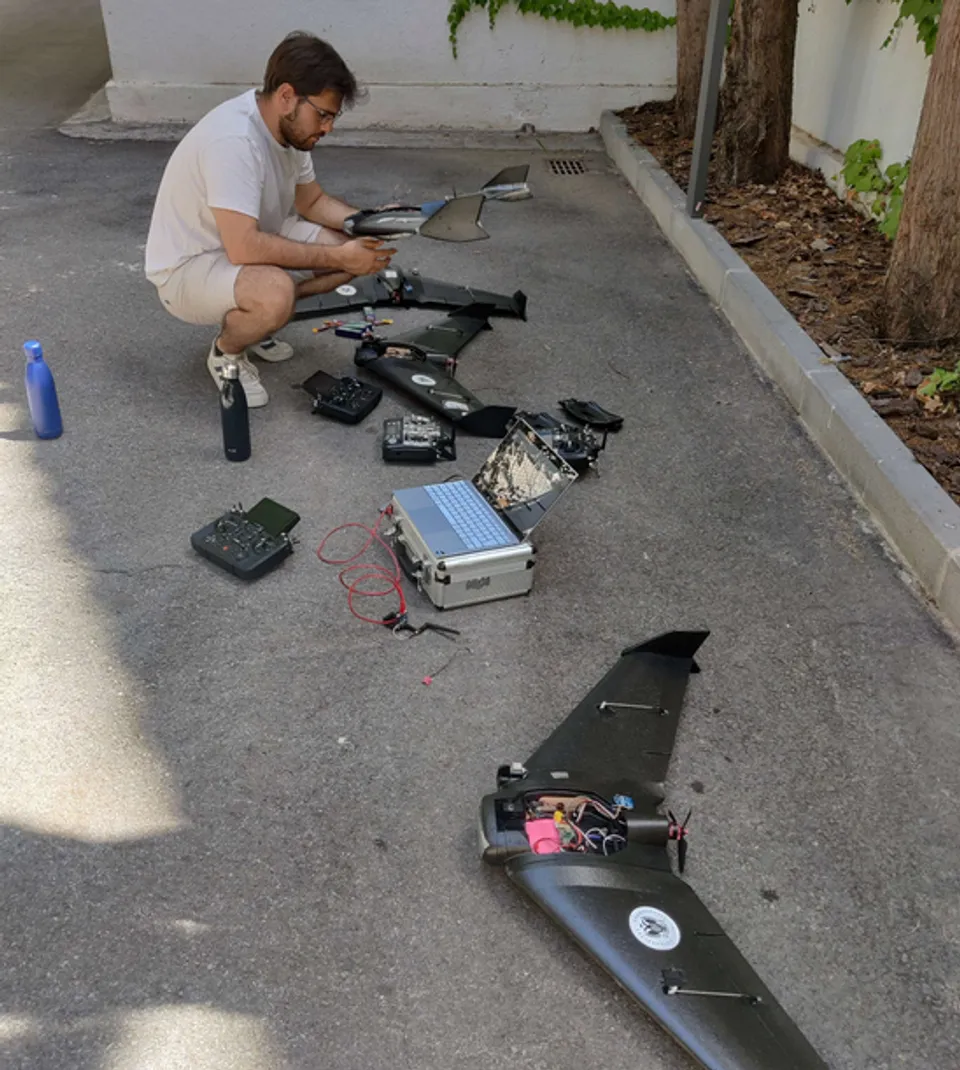
-
The Robotics and Automation Group from the Faculty of Physics at the Complutense University of Madrid has been visiting us over the past few days
We’re working together on a joint proposal and exchanging ideas on autonomous guidance. They’re always more than welcome in Granada! 😄 Looking forward to seeing them again very soon.
Click here for more information →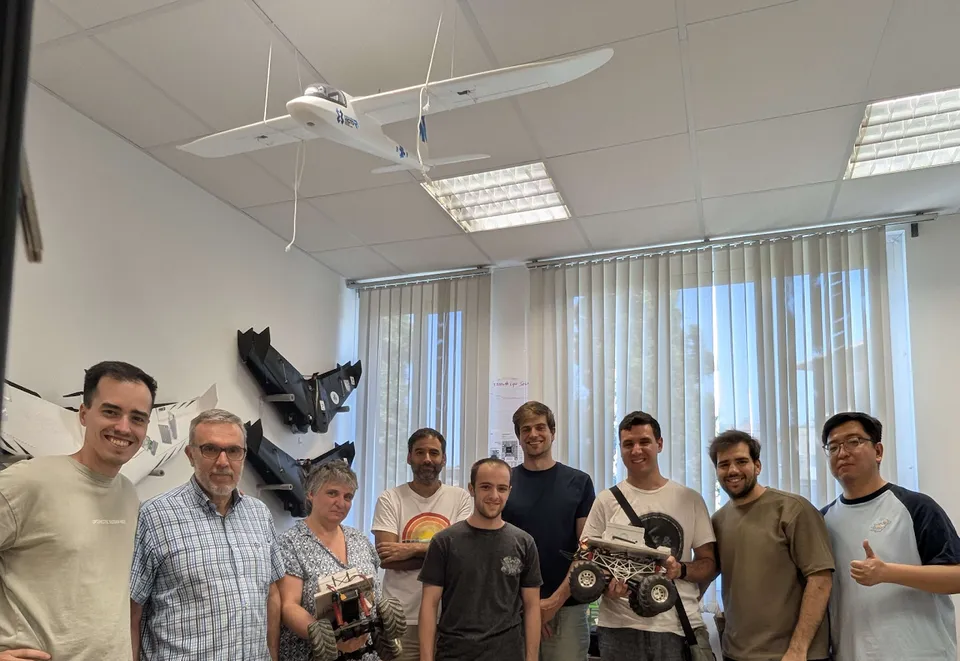
-
We started building our next generation of fixed-wing drones, fully 3D printed
Now, we can print and build one fixed-wing in about one week for a price less than 150 euros (excluding the autopilot and battery). Maiden flight scheduled by the end of July!
Click here for more information →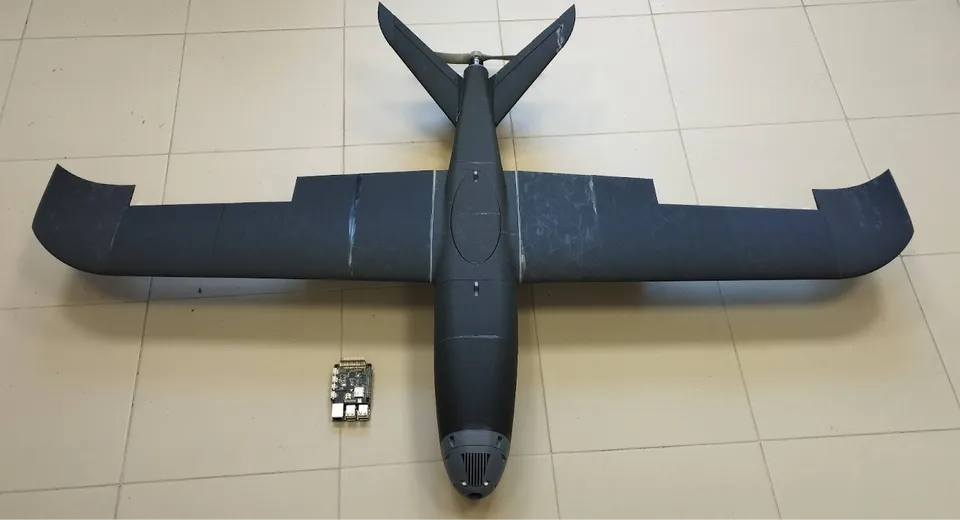
-
Today the Secretary of Research and Innovation of Andalucia visited our new facilities at the Institute of Mathematics of the University of Granada (IMAG)
We effectively moved our activity to IMAG where we have found a great match with their groups on differential geometry and analysis of differential equations! Thanks for the great welcome! News in Spanish
Click here for more information →
-
Our paper titled Distributed Oscillatory Guidance for Formation Flight of Fixed-Wing Drones has been accepted for publication in IROS 2025!
The competition has been very tough with only the 46% of the submissions being accepted. Our paper introduces a novel way on how to coordinate vehicles on arbitrary paths. The idea is simple, the airplanes have a controlled oscillation around their nominal paths in order to slow down or speed up their progress. On top, a simulation with 8 drones; below real telemetry with 2 drones.
Click here for more information →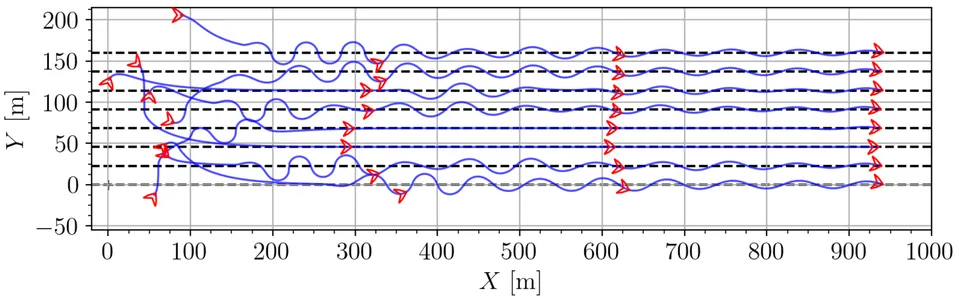
-
Michele Cucuzzella, Associate Professor at the University of Groningen, the Netherlands, visited our group and gave a very inspiring talk titled Krasovskii passivity based consensus algorithms
Thanks a lot for the visit and all the exchange of ideas on consensus algorithms! We hope you enjoyed visiting Alhambra as well:P.
Click here for more information →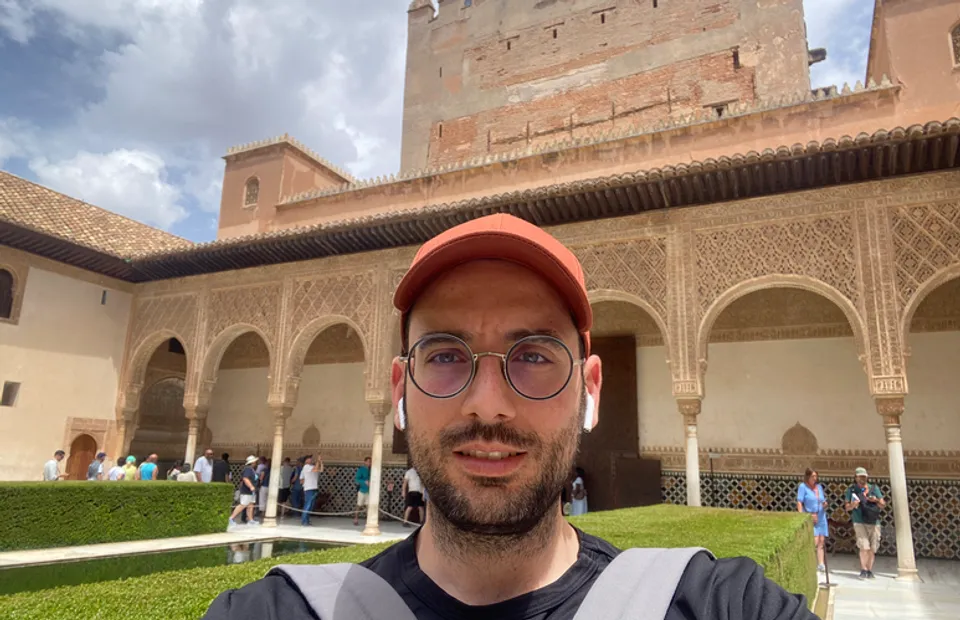
-
Back from Atlanta!
We have presented two works Inverse Kinematics on Guiding Vector Fields for Robot Path Following and Distributed Versatile Maneuvering with Generalized Formations Using Guiding Vector Fields. It was great to catch up with all our collaborators, and to create new connections.
Click here for more information →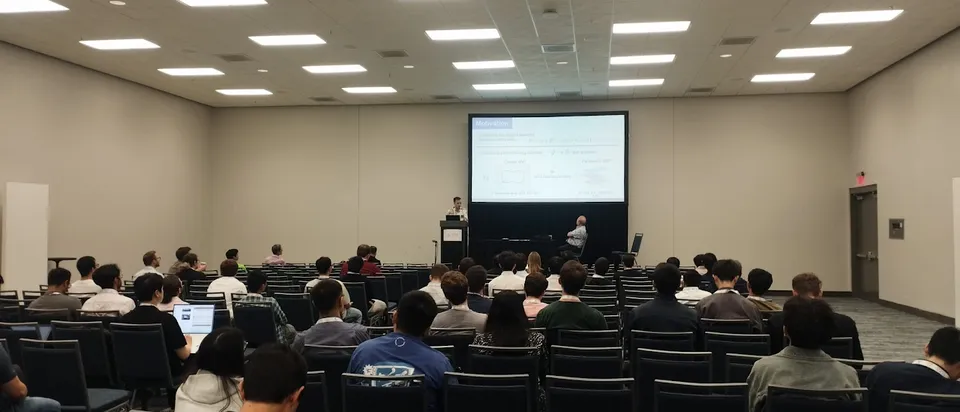
-
We are pleased to invite you to our upcoming Workshop on Guiding Vector Fields (GVFs) for Autonomous Robots, taking place at IROS 2025 in Hangzhou, China
Guiding Vector Fields (GVFs) have emerged as a powerful and versatile framework for autonomous robot navigation, enabling effective motion control in a variety of settings. This four-hour workshop will offer a deep dive into recent theoretical and practical developments in the field, together with tutorials and real drone experiences with GVFs. Meet and engage with researchers and developers in the field, including: Vinicius Goncalves, Weijia Yao, H.G.
Click here for more information →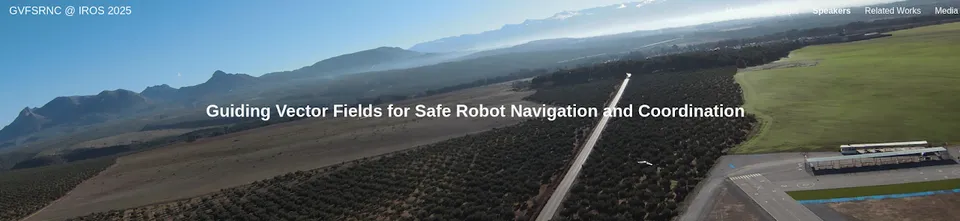
-
Professor Christos Verginis from Uppsala University in Sweden has been visiting us this week
His work focuses on multirobot systems and control theory. It was a great time for many discussions and future collaborations.
Click here for more information →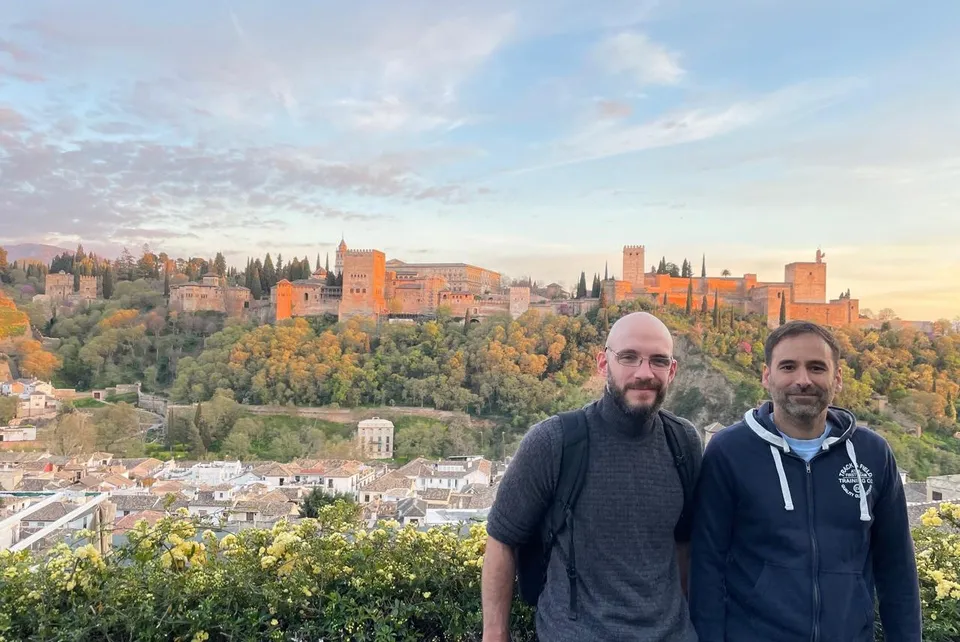
-
You should really consider joining us
Nice group lunch in the village of La Herradura, Granada.
Click here for more information →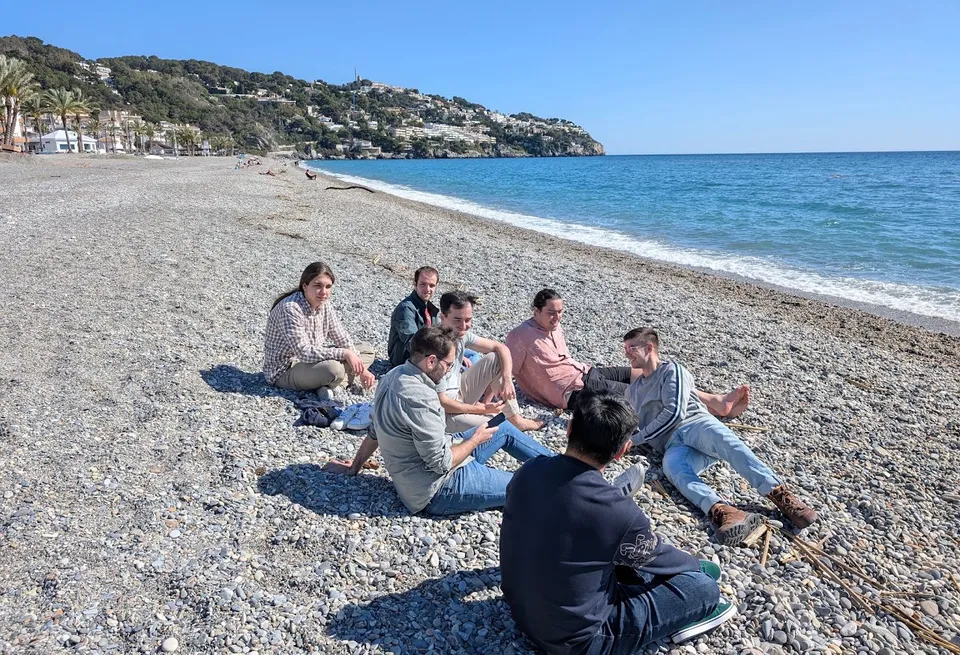
-
Today we were collecting data from our air-to-air network for relative localization!
Click here for more information →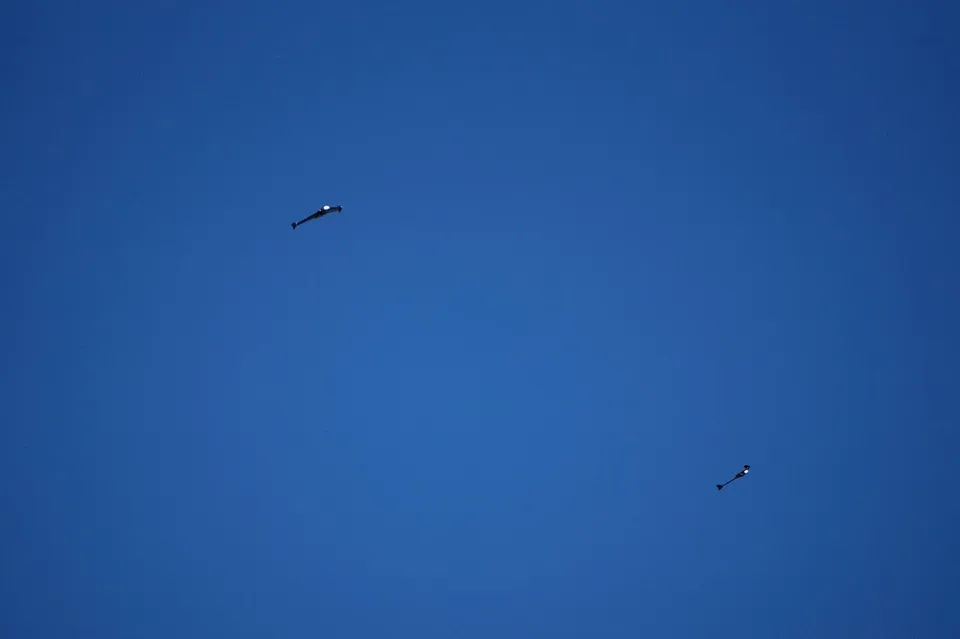
-
We are pleased to announce that two papers co-authored with our collaborators on guiding vector fields for drone systems have been accepted for presentation at ICRA 2025
"Inverse Kinematics on Guiding Vector Fields for Robot Path Following" by Yu Zhou, Jesús Bautista Villar, Weijia Yao, Gang Zheng, Andrey Polyakov, and Hector Garcia de Marina. -"Distributed Versatile Maneuvering with Generalized Formations Using Guiding Vector Fields" by Yang Lu, Sha Luo, Pengming Zhu, Weijia Yao, Hector Garcia de Marina, Xinglong Zhang, and Xin Xu.
Click here for more information →
-
Jesús presented our paper at CDC in Milan titled Resilient source seeking with robot swarms
Full packed room! And a lot of discussions and potential collaborations afterward!
Click here for more information →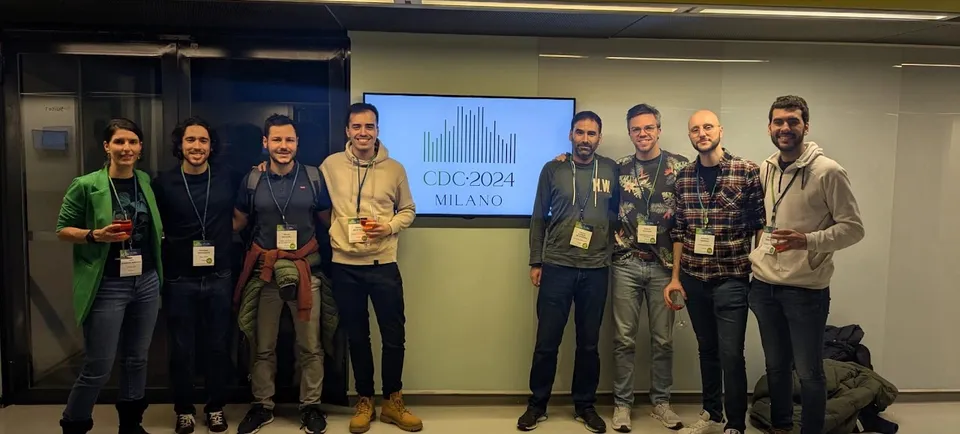
-
Professor Heiko Hamann from the University of Konstanz, who is specialized in robot swarms, is visiting us for two weeks!
He gave an inspiring talk on swarm robotics; it was very interesting to know about how adding more robots to the network can decrease the performance of the team, and how hysteresis plays a role in order to remove robots and recover the original performance of the swarm. Of course, we took him to the field and show him some demos with our aircraft:P.
Click here for more information →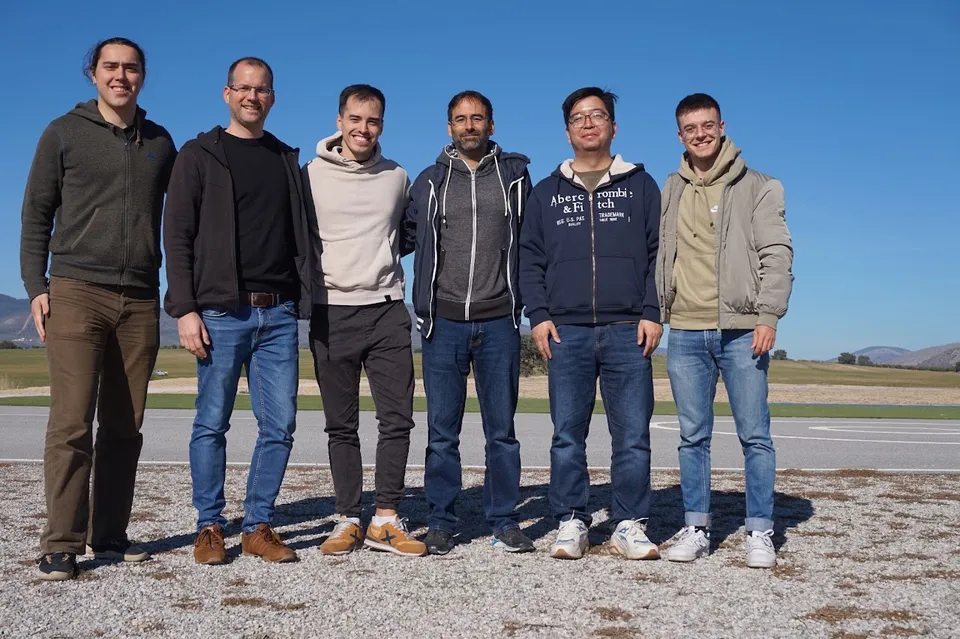
-
Héctor participated in the Symposium on Localization and Cooperative Control of Intelligent Systems at the Southern University of Science and Technology in Shenzhen, China
We were revisiting how rigidity and other strategies in formation control can assist with current open problems in robotics. It was great to meet with old friends again!
Click here for more information →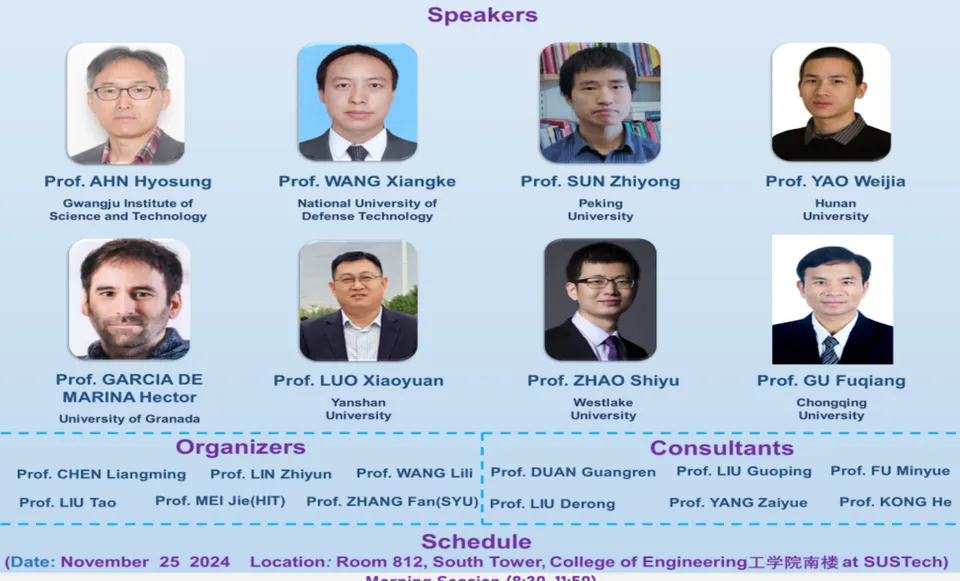
-
Héctor was invited to give a plenary talk at the second edition of ARTS (Autonomous Robotic Technology Seminar) in Shenzhen, China
This is a forum where young researchers in robotics gather to exchange experiences and update our community (around 1000 attendees!) with our latest results.
Click here for more information →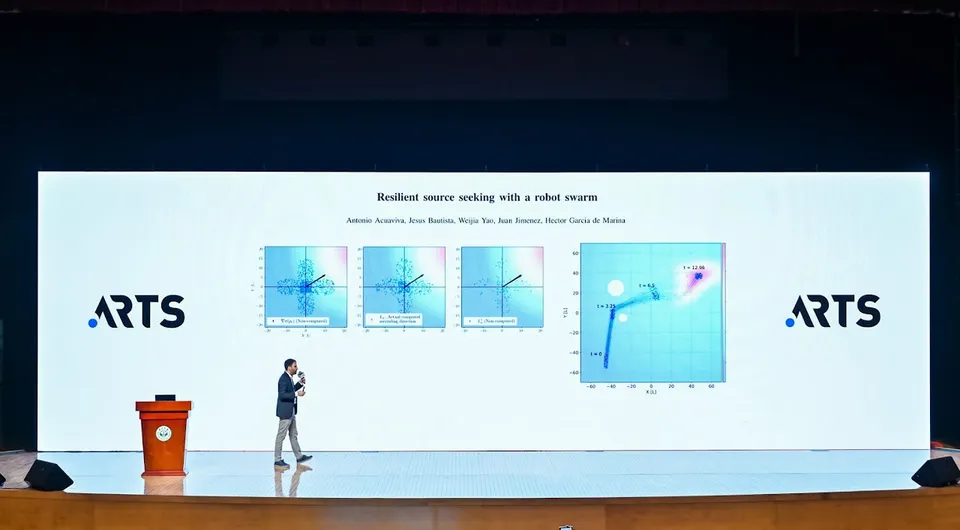
-
Héctor gave a talk at the II Andalucía AI Congress on Practical Challenges in Robot Swarms
The audience was highly diverse, including people from academia, industry, the military, and ordinary citizens who were eager to learn what a robot swarm truly is. We even made to the news! https://www.ideal.es/taigranada/robots-drones-escenario-alternativo-congreso-inteligencia-artificial-20241120160208-nt.html
Click here for more information →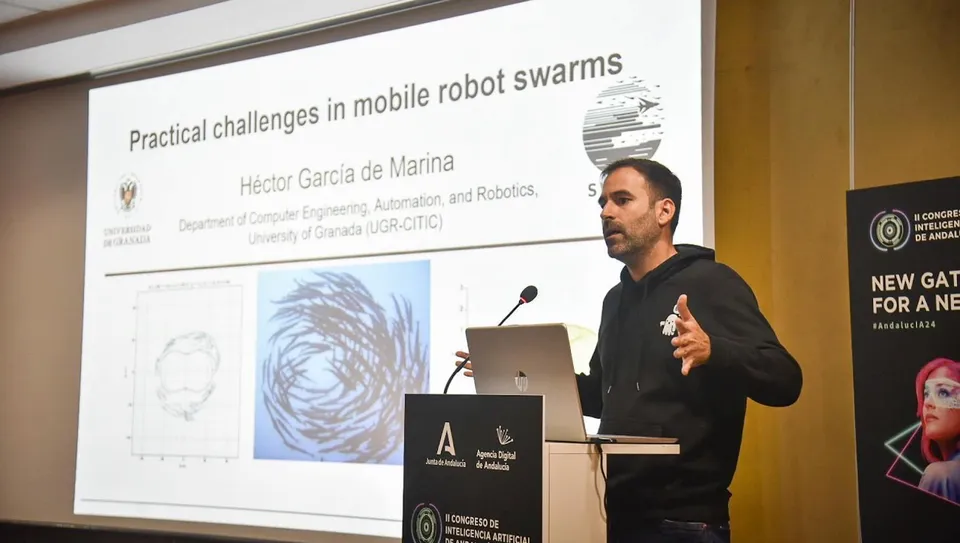
-
Eduardo Montijano and David Morilla from the University of Zaragoza were visiting our lab
We were discussing how to integrate active perception to our drones, and how to enhance our distributed algorithms with dynamics consensus algorithms. In the photo, we took our guests to fly our drones and demonstrate the effectiveness of our 3D guiding vector fields for fixed-wing drones.
Click here for more information →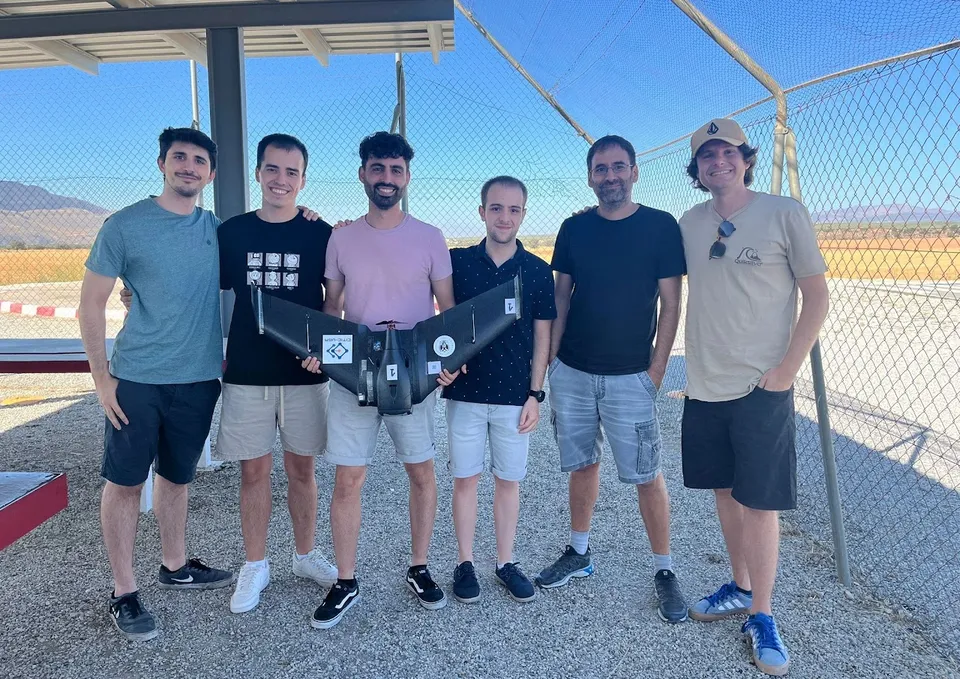
-
We have a visitor!
Yu Zhuo from INRIA, Lille, France. He is a Ph.D. student under the supervision of Andrey Polyakov and Gang Zheng, and his research is on Guiding Vector Fields for autonomous vehicles. During his visit, we will integrate some of this work into our UAVs. In the photo, we were flying over a nearby lake taking scientific data over a calibrated weather station so a team of physicists can estimate the local wind field.
Click here for more information →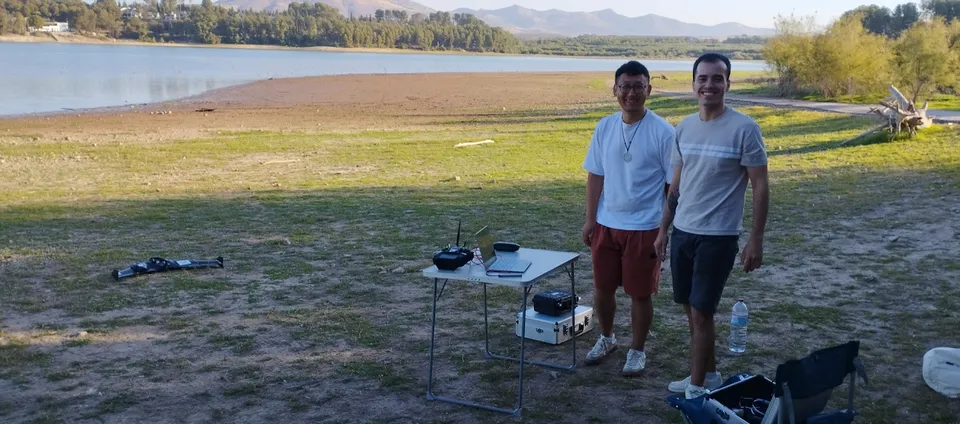
-
Our work on how to coordinate unicycles without orientation measurements has been accepted for publication!
We prove rigorously intuitive results; as we can see in the figure, the vehicles' alignments are under control if you control distance-rigid formations of moving unicycles using only relative positions. J. Chen, B. Jayawardhana, HG de Marina. Distributed Distance-based Formation-Motion Control of Unicycle Agents without Orientation Measurements. To appear in Transactions on Control of Network Systems. 2024.
Click here for more information →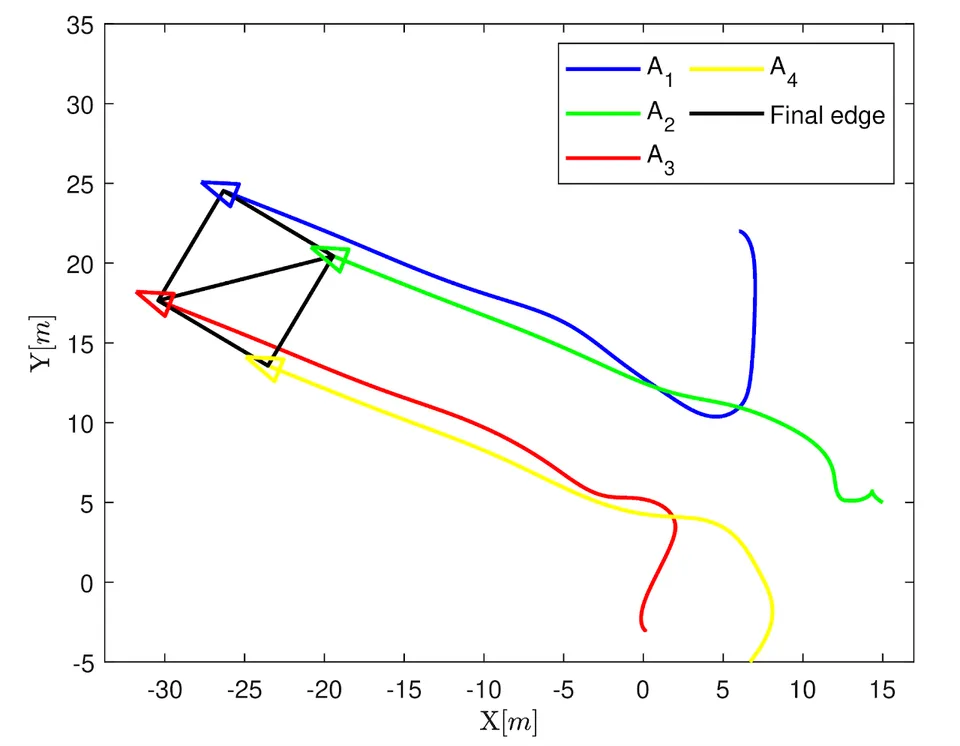
-
Héctor was presenting our work on source seeking for robot swarms in two workshops at the European Control Conference in Stockholm
Workshop on Advanced sensory-based estimation and control of autonomous vehicles. Workshop on Task and Motion Coordination under Geometric, Dynamic and Temporal Constraints. Many thanks to the organizers for the invitation and the attendees for their interest! Conference paper: Resilient source seeking with robot swarms
Click here for more information →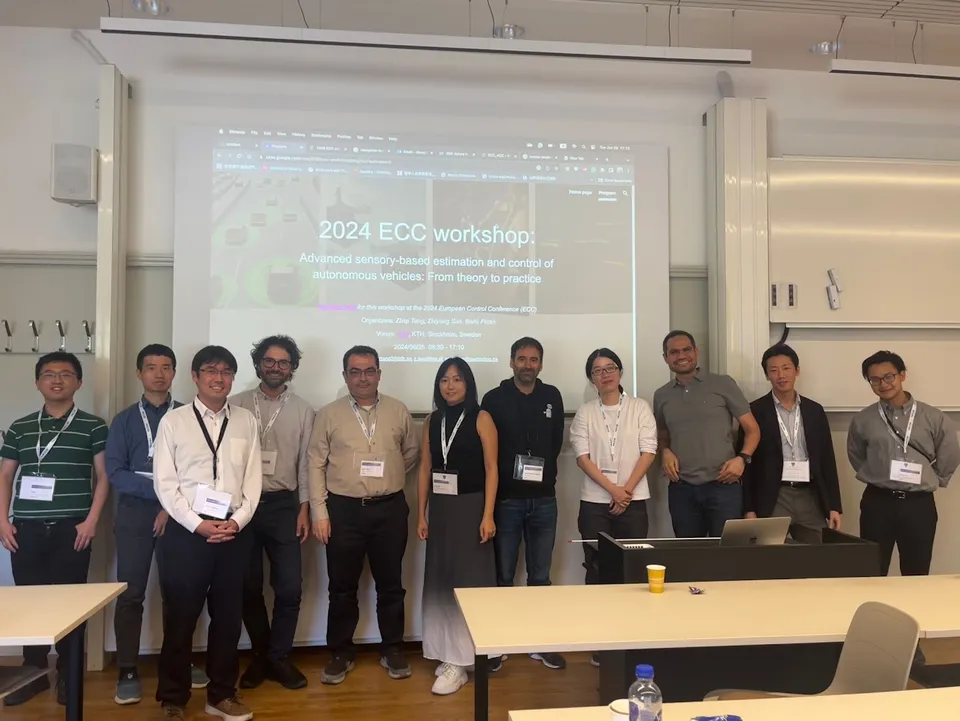
-
Our work Resilient source seeking with robot swarms by A
Acuaviva, J. Bautista, W. Yao, J. Jiménez, HG de Marina has been accepted in the 63rd IEEE Conference on Decision and Control (CDC) 2024! The next step is the journal version with real robots! In fact, today we have started the first experiments with three rovers in a purely swarm setup.
Click here for more information →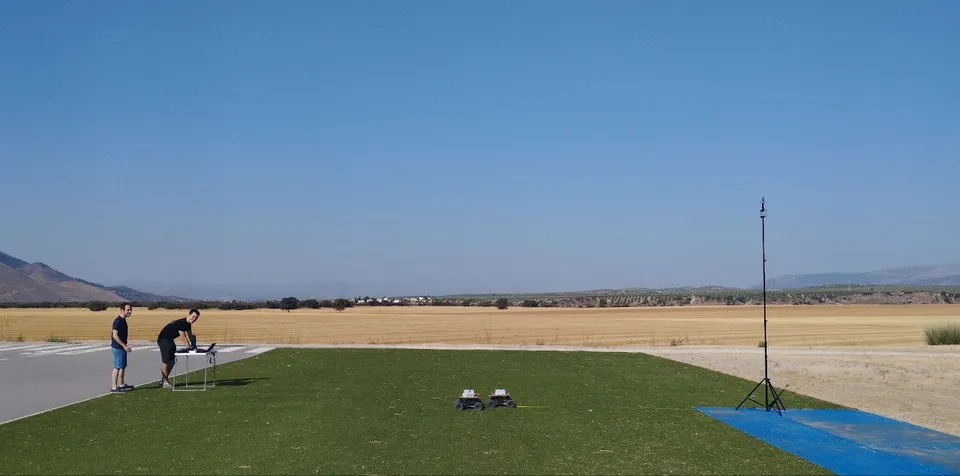
-
Jesús and Héctor have written a tutorial for aligning 3D unicycles with partially known vector fields using geometric controllers
We have digested concepts that are not so common in robotics with very explicit examples. This technical note aims to introduce geometric controllers to roboticists bridging some gaps between theory and practice. Tutorial: SO(3) attitude controllers and the alignment of robots with non-constant 3D vector fields.
Click here for more information →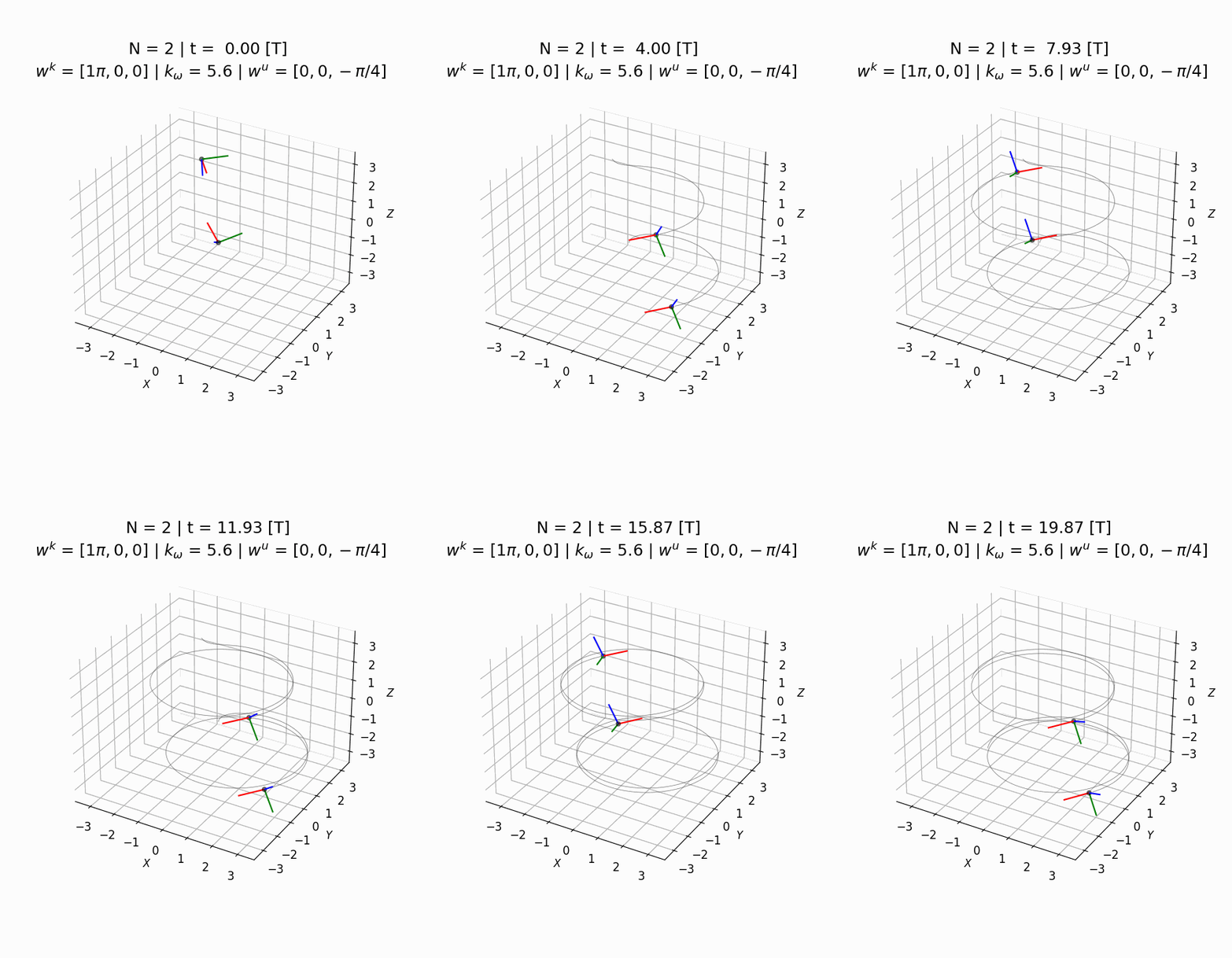
-
Journal paper accepted!
Our work titled Scaling up the formation of agents with heterogeneous sensing: mixed distance and bearing-only by J. Chen, B. Jayawardhana and HG de Marina will be published in IEEE Transactions on Automatic Control. In this work, we show a systematic method on how to scale up a formation control network whose agents control different geometric properties between their neighbors. Congrats Jin for the hard and eventually very rewarding work!
Click here for more information → -
We are back from ICRA 2024 in Yokohama!
Jesús presented our work titled Behavioral-based circular formation control for robot swarms.
Click here for more information →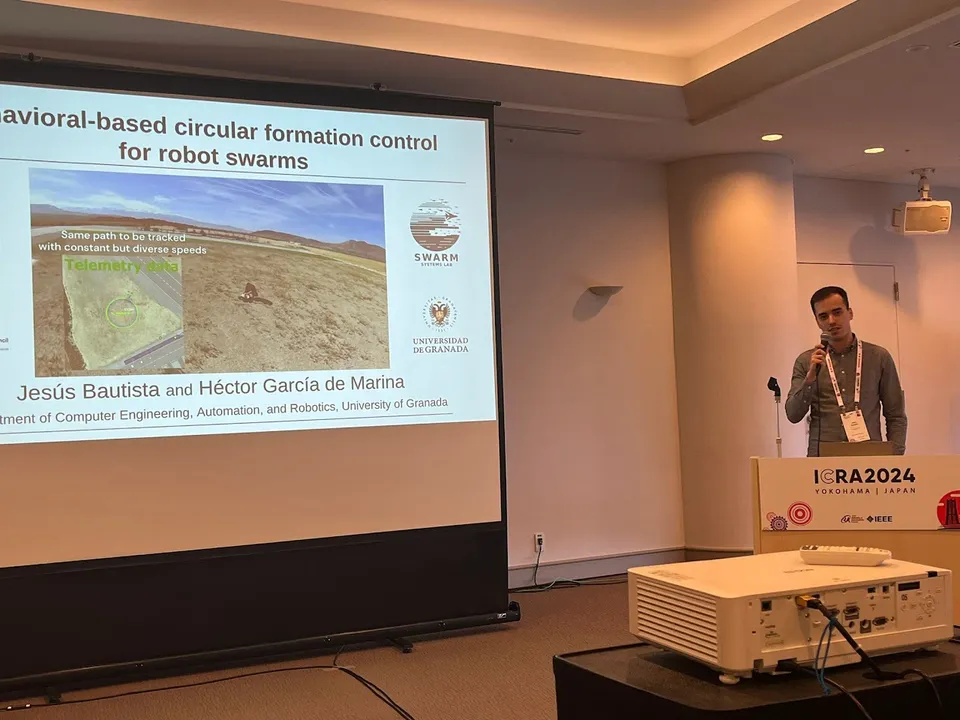
-
Héctor was visiting the Science of Intelligence Institute in Berlin mainly joined by researchers from Technische Universität Berlin and the Humboldt-Universität zu Berlin
Héctor gave a talk about the practical challenges that swarm robotics are facing from the perspective of control engineering.
Click here for more information →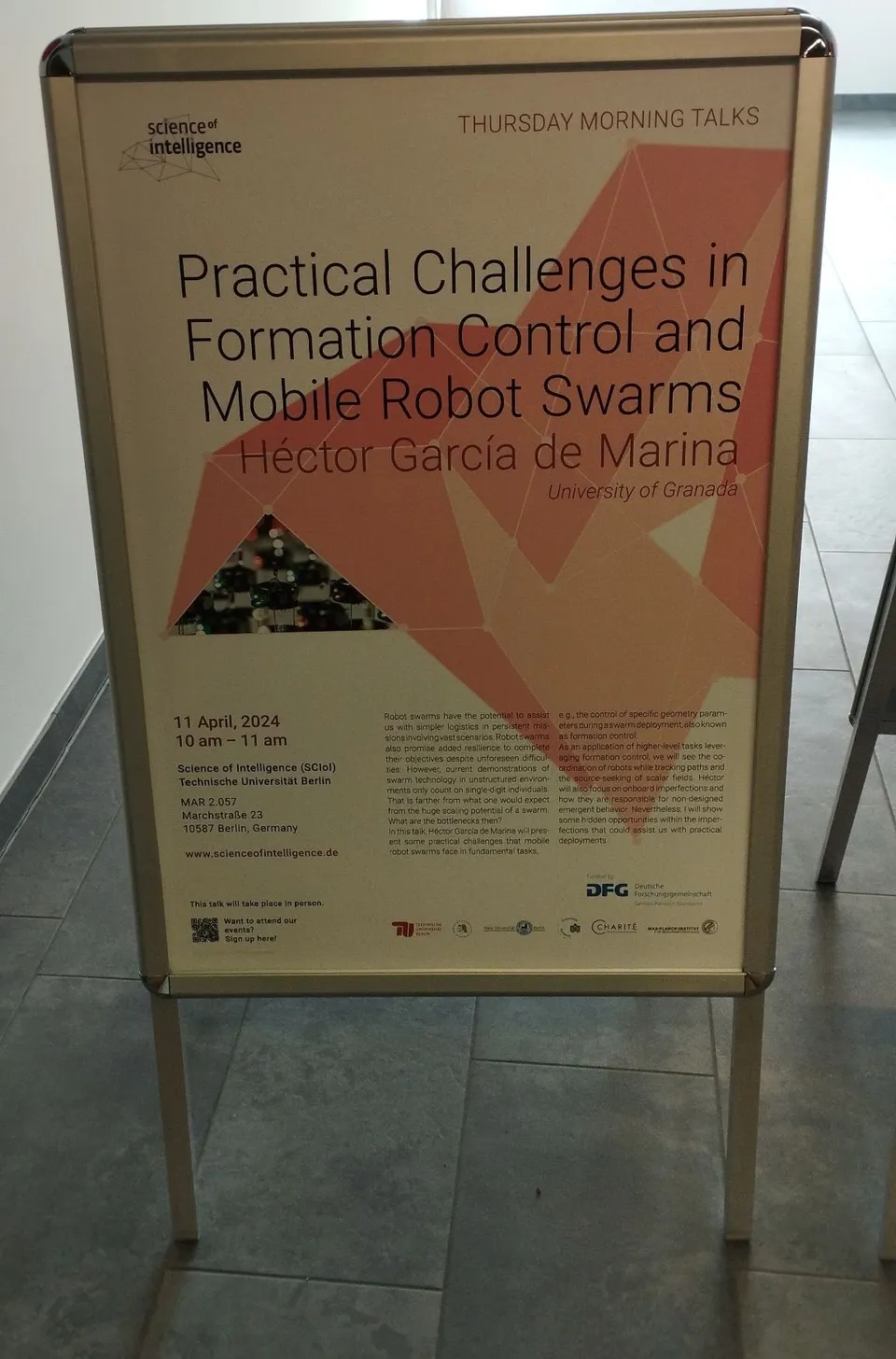
-
Héctor was visiting the University of Zaragoza and its Robotics, Perception and Real Time Group
He met many robotics colleagues and exchanged many interesting ideas! He also gave a talk about swarm robotics (we could not tell). It was really productive, and some interesting collaborations emerged regarding our ERC project.
Click here for more information →
-
Today, we tested new adjustments in the altitude controller of our aircraft
It is astonishing to check that in a 3D trajectory (ellipse, 60m peak, 40m low) our vertical controller kept the error between +-2meters! (plot above). We have tested the XY controller, and now our horizontal errors are less than 0.5 meters! (plot below). These results were achieved with today's 30km/h winds with an aircraft weighing less than one kilo!
Click here for more information →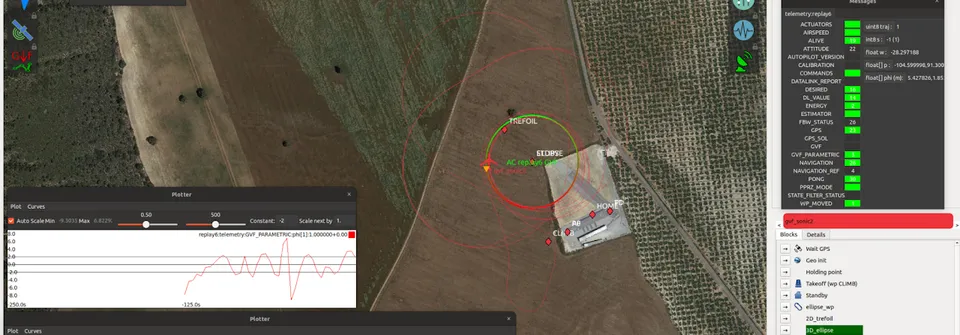
-
Our lab was invited to introduce what is the (drone) swarm technology and its state-of-the-art to the Spanish Army
The (four stars) general of the Spanish Army attended our presentation!
Click here for more information →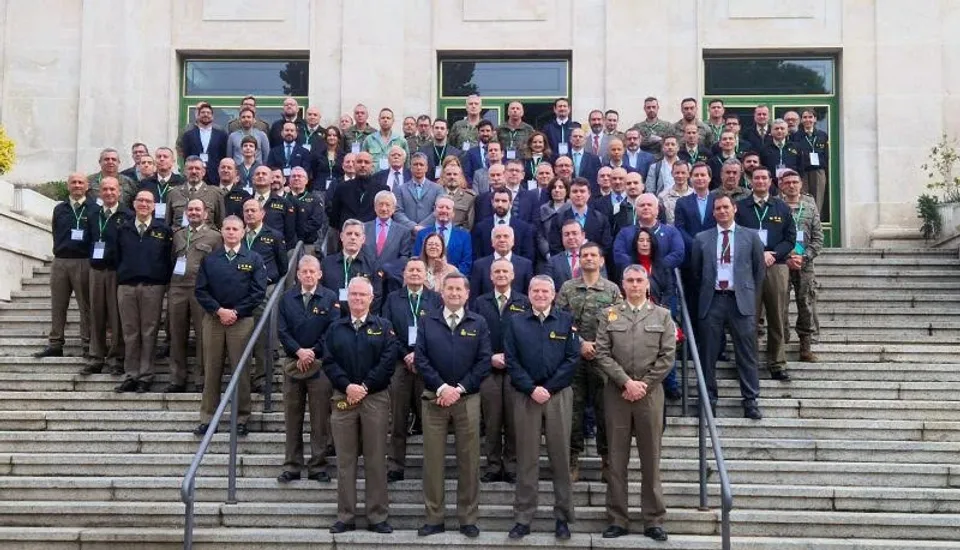
-
Our friends from CanalSur (Spanish TV from Andalucia) made a reportage about our research on swarm robotics!
In this video, we explain the concept of a robot swarm and what are the applications of swarms of drones in the real world. 13 /10/202 3 Jin, a Ph.D. student from the University of Groningen, is visiting us this October. We are exploring with him a novel approach in formation control. We call it cloud-based formation control! Stay tuned for the details:P. In the meantime, we have taken Jin to fly to our club. It seems he had a good time there. Maybe you can spot him in the video.
Click here for more information → -
( OPEN POSITIONS!) We have opened a Ph.D
position within our ERC project Controlling imperfect robot swarms. We are also interested in hosting FPU candidates at our lab. If you are interested or you know somebody who is a good match; please, check out the following link https://sites.google.com/view/hgdemarina/open-positions. In addition, we offer Master and Bachelor projects within our lab; please, check out the following link https://sites.google.com/view/hgdemarina/masterbachelor-projects.
Click here for more information → -
oMg!
The ERC contacted Héctor this morning. His proposal titled Controlling i mperfect robot swarms got awarded with the Starting Grant! Huge!
Click here for more information → -
The 2023 IEEE RAS Summer School on Multi-Robot Systems was a huge success!
Students were engaged, invited lecturers had an outstanding level, and the city of Prague is certainly beautiful. Thanks again for such a nice invitation!
Click here for more information →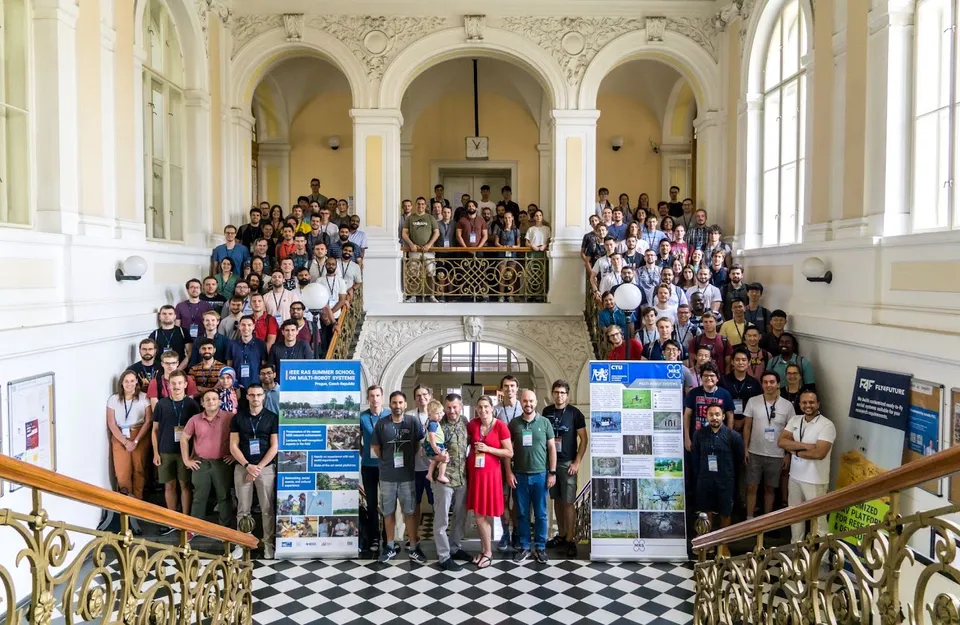
-
First maiden flight for Jesús!
There is always a first time, and he was an excellent ground-mission controller! We flew an Opterra 1.2m successfully and collected the necessary flight data for its trimming in the lab later on.
Click here for more information →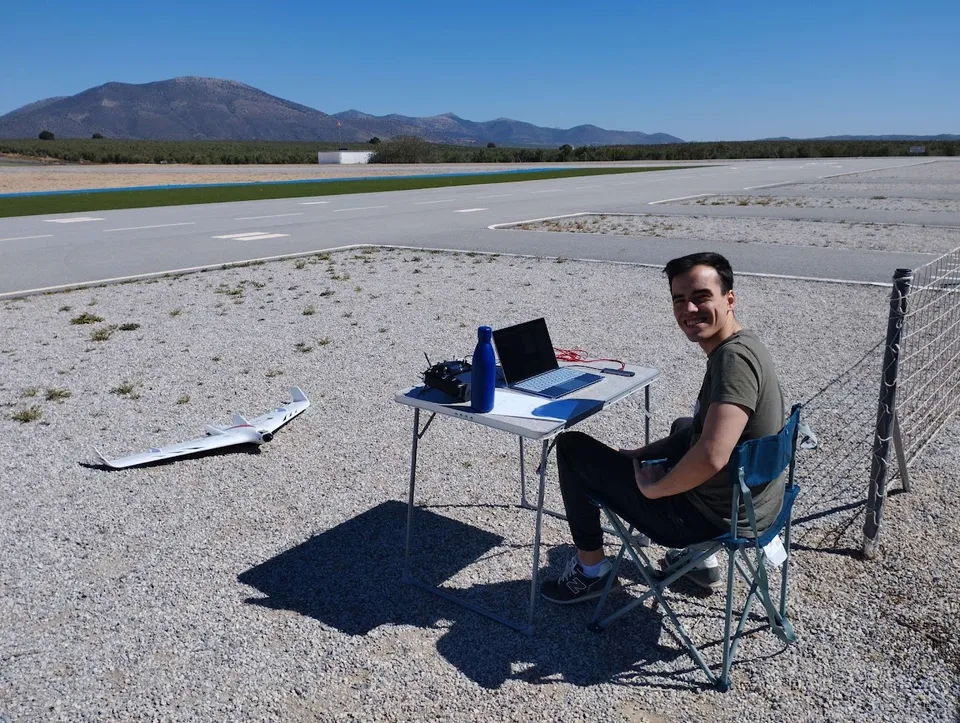
-
Héctor was invited to give a lecture at the 2023 IEEE RAS Summer School on Multi-Robot Systems together with other researchers like Dario Floreano and Javier Alonso-Mora, organized by the Czech Technical University (CTU) in Prague
He will present his latest results on source-seeking with resilient robot swarms. Hope to see you there!
Click here for more information →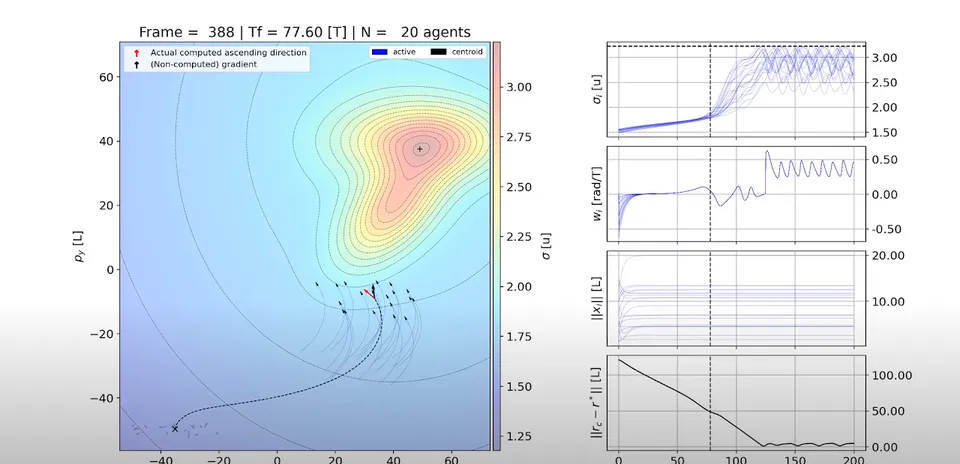
-
Congratulations Jin!
We had an accepted paper in the American Control Conference on..... of course, formation control:P. The title of the article is Distance-based Formation-Motion Control for Unicycle Agents written by Jin Chen (Ph.D. student in Groningen), Bayu Jawardhana, and Héctor. In this article Jin provides answers to some open questions, such as the exponential converge, of a team of unicycles following distance-based formation controllers with velocity tracking.
Click here for more information → -
Héctor gave a talk on swarm robotics and formation control at the Beijing University of Technology
Hopefully, next time it will be in person:P.
Click here for more information → -
The ERC just informed Héctor that they propose his Starting Grant for funding (maximum score, A, yei!)
However, he is in the reserve list:S. Who knows whether the list will catch him after the UK not being part of the program this year either.
Click here for more information → -
Changing the mood, Héctor would like to introduce you to our fantastic facilities for our flights at RC Club ciudad de la Alhambra
Astonishing landscape with mountains, lots of space to fly, and clear runaways. He feels very fortunate to be part of this club!
Click here for more information →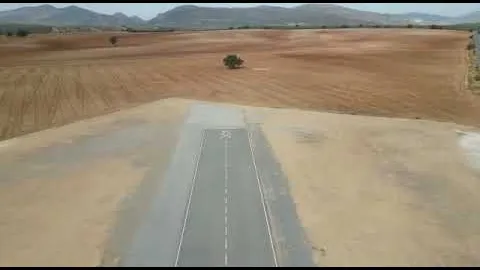
-
The matured work from our paper nominated for the best paper award in ICRA has been accepted in IEEE Transactions on Robotics!
In this work, we show how to coordinate distributely teams of robots on 3D surfaces with strong converge guarantees. As usually, we provide real experiments with aircraft, and the implementation is ready for the general public in our open-source project for autopilots Paparazzi.
Click here for more information →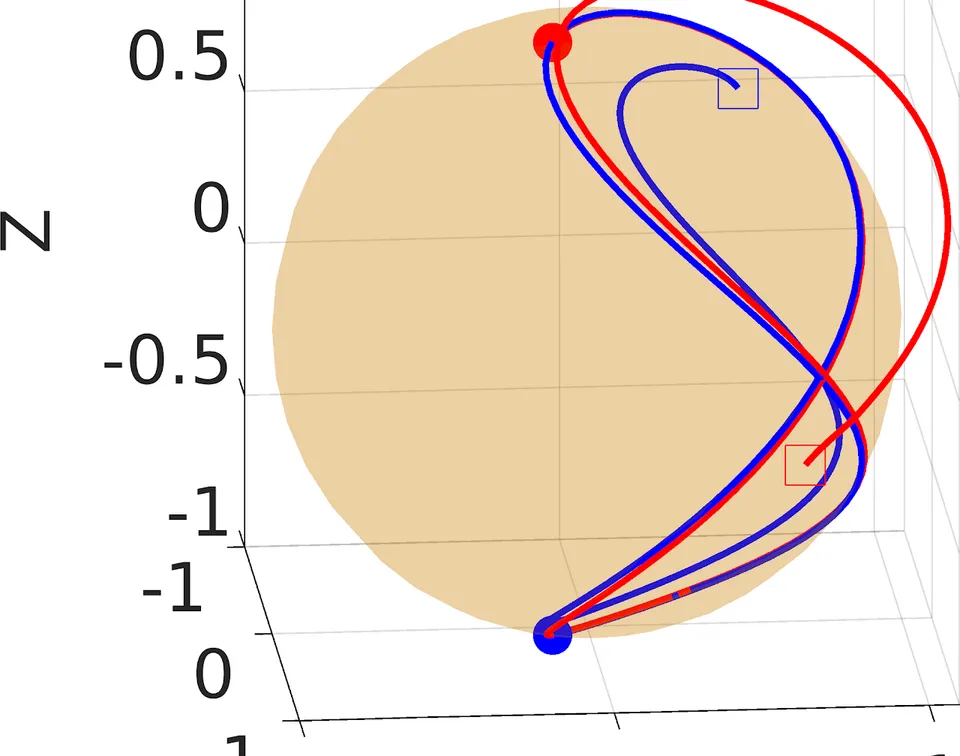
-
We were working with Haiwen Wu (Ph.D
student in Groningen) on the application of formation control techniques to arm manipulators. He conducted a very detailed analysis on to apply different distance and position-based control to arm manipulators with uncertainities in their parameters. Our results can be found in our accepted paper Distributed formation control for manipulator end-effectors, to be published in the IEEE Transactions on Automatic Control journal.
Click here for more information → -
Congratulations Adam!
Our (former) Ph.D. student made it to IROS 2022. Our paper titled Energy-Aware Planning-Scheduling for Autonomous Aerial Robots exploits typical periodic patterns in survey missions to optimize the energy consumption of a UAV.
Click here for more information →
-
Héctor was invited to give a talk by the control engineering group at Cambridge University
This talk belongs to a series of seminars devoted to control theory topics. It will be held on the 30th of June, it is online, and if you are interested you can find more information here.
Click here for more information → -
It is official now
From the 1st of April, Héctor will start as a Ramon y Cajal researcher at the University of Granada, in the beautiful city of Granada. As principal investigator, he will continue focusing on autonomous mobile robots and robot swarms.
Click here for more information →
-
Our new team member Jesús has ported Paparazzi, the opensource autopilot, to off-road rovers!
A new firmware has been programmed, and it has been made compatible with the guidance from the Guiding Vector Fields that has worked wonderfully for our planes. Next step is to build more copies for our heterogeneous robot swarm.
Click here for more information →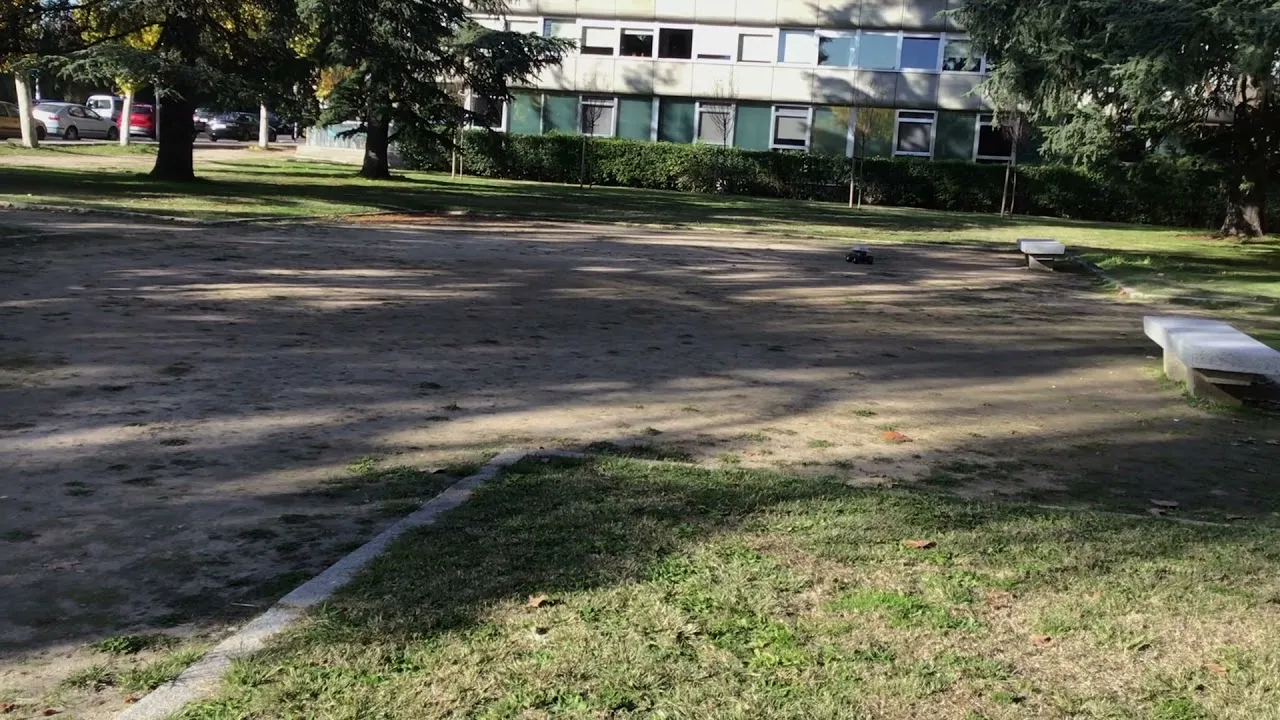
-
Héctor has been awarded the Ramón y Cajal grant!
That is (arguably) the most prestigious Spanish grant for young investigators, and it guarantees five years of independent research funded by the Spanish government. It is an excellent opportunity to think and organize the following steps on his research on swarm robotics.
Click here for more information → -
The first copy for Héctor's aerial swarm had a successful maiden flight!
In fact, this is his first autonomous flight at his new club in Arroyomolinos. Nice to be licensed to fly aeromodels again. The aircraft is a Sonicmodell AR.Wing 900 geared with Paparazzi, the open-source autopilot.
Click here for more information →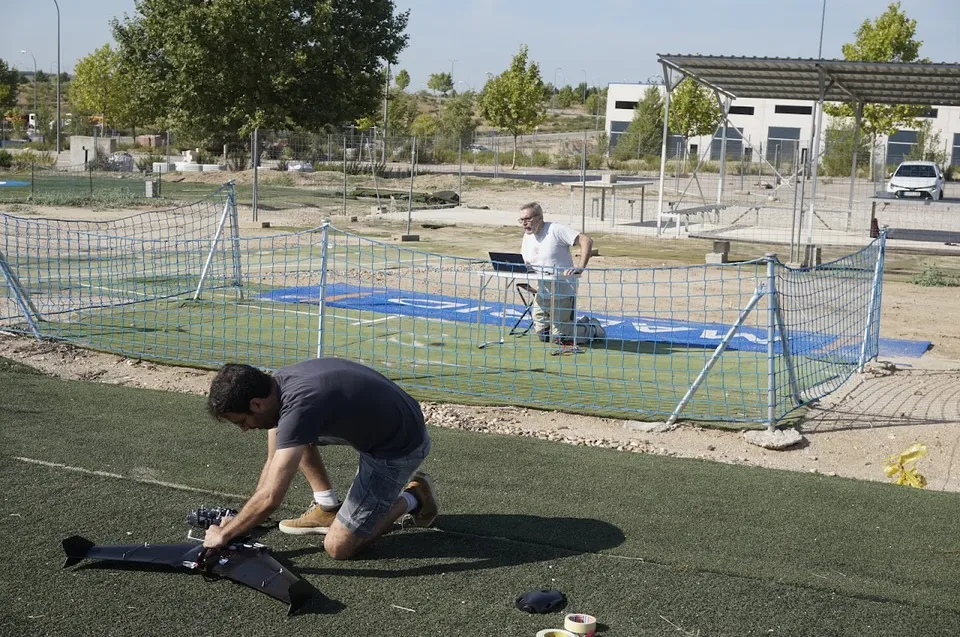
-
Héctor was appointed as Associate Editor of the IEEE Transactions on Robotics
He is very excited to serve for the flagship journal of the IEEE Robotics & Automation Society, one the top robotics publications in the world.
Click here for more information → -
Our works in formation control has been positively welcomed in the 60th IEEE Conference on Decision and Control ( CDC ) 2020!
The first work, with Haiwen as first author, we explore formation control algorithms applied to arm manipulators Distributed formation control of manipulators' end-effector with internal model-based disturbance rejection. The second work, we explore how to induce collective motions in affine formation control Leaderless collective motions in affine formation control.
Click here for more information → -
We were contacted by the ICRA's organization today
Our submission Distributed coordinated path following using guiding vector fields has been nominated for the BEST PAPER AWARD together with other three finalists! There were 4005 submission, and only four were selected among 1946 accepted works. The authors of this paper are Weijia Yao (University of Groningen), Héctor García de Marina (University Complutense of Madrid), Zhiyong Sun (TU Eindhoven), and Ming Cao (University of Groningen). Congrats!
Click here for more information → -
Our only submission to ICRA has been accepted!
Our work titled Distributed coordinated path following using guiding vector fields shows how to guarantee formally the global convergence of a team of agents to a desired path in arbitrary dimensions and with a desired inter-agent configuration. Experiments with two fixed-wings and simulations with hundreds of agents show appealing applications for formation flights and volume coverage.
Click here for more information → -
Héctor and his colleague Leonardo Colombo have received good news about our paper titled Forced Variational Integrators for the Formation Control of Multi-Agent Systems
It has been accepted in IEEE Transactions on Control of Network Systems! In this work, we explore the applications of Variational Integrators for large simulations in multi-agent systems. We show how to save simulation time and have more accurate numerical results than traditional integration methods such as Runge-Kutta.
Click here for more information → -
Today, we have been informed that our paper titled Singularity-free Guiding Vector Field for Robot Navigation has been accepted in IEEE Transactions on Robotics in the first round of reviews!
In this work, we (with Weijia Yao from Groningen as main author) show how to construct guiding fields for robots with complex dynamics to track non-trivial paths, e.g., self-intersected 3D ones. The implementation is ready for its exploitation in the open-source project Paparazzi for fixed-wing aircraft.
Click here for more information → -
Our paper titled Maneuvering formations of mobile agents using designed mismatched angles has been accepted in IEEE Transactions on Automatic Control
In this work, Liangming Chen from the University of Groningen explores and analyzes how formations can be maneuvered by adding mismatches to the interior angles to be controlled.
Click here for more information → -
This one is special for Héctor since his first contact with control and aeronautics was in the high school when he read for the first time an issue of the Journal of Guidance, Control, and Dynamics
Héctor is very happy to announce that our work titled Collaborative target-tracking control using multiple autonomous fixed-wing UAVs with constant speeds has been accepted in the mentioned journal!
Click here for more information → -
Héctor's first solo-authored paper titled Maneuvering and robustness issues in undirected displacement-consensus-based formation control has been accepted in IEEE Transactions on Automatic Control
In this article, he studies the impact of non-perfect sensing on the distributed formation control of agents.
Click here for more information → -
We have two accepted works in CDC 2020!
One is our already accepted article Angle-Constrained Formation Control for Circular Mobile Robots, and the second one is a joint work with the guys in Groningen, Mobile Robot Path Following Control in 2D Using a 3D Guiding Vector Field: Singularity Elimination and Global Convergence.
Click here for more information → -
Our article titled Angle-Constrained Formation Control for Circular Mobile Robots has been accepted in IEEE Control Systems Letters
Nelson made a fantastic job formalizing the relation between bearing-based and distance-based formation control.
Click here for more information → -
Héctor starts as a research fellow at the Universidad Complutense of Madrid under the program Atracción de Talento cofunded by the goverment of the Autonomous Community of Madrid
He will continue his research in multi-agent systems and robotics in the Deparment of Computer Architecture and Automatic Control at the Faculty of Physics in Madrid.
Click here for more information → -
Our paper titled Forced variational integrator for distance-based shape control with flocking behavior of multi-agent systems has been accepted at IFAC World Congress 2020, Berlin!
This was a joint work with the Institute of Mathematical Sciences (ICMAT) in Spain, and the University of Groningen in the Netherlands.
Click here for more information → -
Héctor is honored to join the International IMAV Comittee!
IMAV is a competition and conference event on Mini and Micro Aerial Vehicles that was born in Europe in 2009. After several consecutive years held in Europe, IMAV aimed to be spread worldwide starting in Beijing 2016. IMAV currently gather around 200 researcher all over the world to demonstrate their capabilities for fulfilling new challenges in drone autonomous missions.
Click here for more information → -
Ewoud Smeur from Technical University of Münich was visiting us
We completed the first autonomous flight with Paparazzi at the H.C. Andersen airport!
Click here for more information → -
Our paper titled On the observability of relative positions in left-invariant multi-agent control systems and its application to formation control has been accepted at CDC 2019, Paris!
This was a joint work with the Institute of Mathematical Sciences (ICMAT) in Spain.
Click here for more information →